
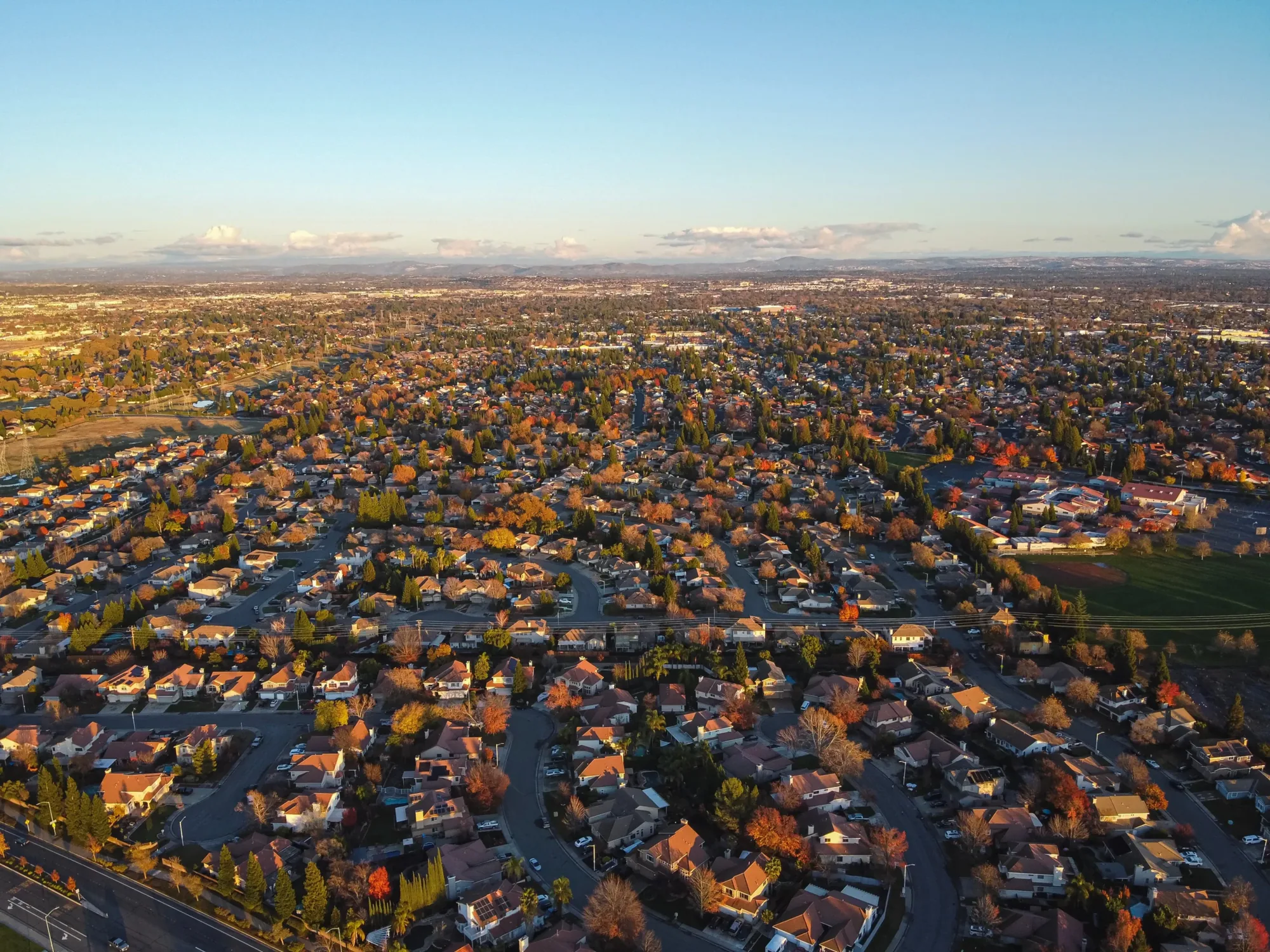
Stoneridge in Roseville, CA
A Stoneridge roof decision begins with the details that control water: seams, drains, curbs, transitions, and the roof edge. Stoneridge is listed among Roseville’s adopted specific-plan areas, but that designation does not describe an individual building’s assembly. We inspect the property, record the roof sections and operating limits, then match the work to the condition we can verify.
Exposure cycle: prepare the surface and drainage
At Sacramento Executive Airport, the normal precipitation totals are zero for July and 3.66 inches for January. This is regional climate context rather than a Stoneridge site gauge. A dry stretch offers time to locate loose seams and flashing before winter rain tests them. We check drains and overflow routes during the same visit, because a repair detail cannot manage water if the path to discharge is blocked.
The station's monthly norms put July's mean high at 92.6 degrees and August's at 91.9.
About fourteen days annually reach 100 degrees or higher.
These numbers describe regional air, not a Stoneridge roof surface.
We do not convert them into roof temperatures.
On the roof itself, we inspect exposed sealant, patch edges, membrane laps, and curb flashing for brittleness or separation.
Photos record the observed condition so the owner can track whether a defect changes over time.
Before the wet season, a preventive maintenance visit can clear accessible drains, verify overflow paths, and prioritize exposed details. We note whether water is standing because debris blocks an outlet or because the roof plane is low. Those conditions need different remedies. A maintenance record that names the drain, section, and observed water path is more useful than a general note that the roof needs attention.
Work sequence: protect access and equipment
Unexpected water entry needs a prompt response. Our emergency line is available around the clock, seven days a week, including holidays. For planned work, we agree on daily closeout notes, temporary protection, and how the crew will handle an open edge if weather or access changes the sequence. We can coordinate surrounding Southeast Roseville and Northeast Roseville property visits without mixing their condition records.
Diligence Notes: distinguish the visible defect
A stain, blister, or ponded area can point toward a roof issue without defining its full extent. We inspect the likely entry detail, surrounding membrane, nearby seams, and drain path. A moisture survey can flag patterns under the surface, but the result needs comparison with the roof assembly and physical conditions. When confirmation could change the scope, we identify a targeted verification step.
Our written roof condition report separates active water entry, maintenance work, and long-term capital concerns. It can include roof sections, photos, drain and penetration locations, recommended repairs, and access limits. If an area is obscured or unsafe to reach, the report states what should be arranged for a complete review. We do not treat a nearby symptom as proof of the defect location; we trace the likely route and explain the next confirmation step.
Scope boundary: keep sound material where possible
A localized repair is often most useful when the opening has a clear boundary and nearby membrane remains sound. We identify the existing system, prepare the surface, and tie the repair into material that can hold it. When defects recur at several seams or flashings, we inspect for a broader bond or moisture problem before repeating the same patch. The record should make clear which areas are repaired and which need monitoring.
A recover or coating system requires more than a surface that looks intact. We verify whether moisture is present, whether the assembly can support added material, and how new work will affect drains, edges, penetrations, and equipment curbs. A recover can alter finished height; restoration requires compatible preparation and secure details. If the deck or insulation is compromised, removal of affected layers may be necessary. The proposal states the limits that are included and how hidden conditions are approved.
A replacement scope should cover tear-off, insulation, deck repair, attachment, membrane, perimeter metal, drainage, and closeout. System selection follows the use and assembly: standing-seam metal and low-slope membranes each require distinct transitions and movement allowances. We explain options against the roof observed, not a generic product preference.
Approval path: account for code and concealed work
Several elements affect cost and timing: access, removal depth, wet insulation, deck condition, equipment protection, drain work, edge metal, and coordination with other trades. Temporary dry-in and protection below may matter as much as the field membrane on an occupied property. We itemize these factors so the owner can compare a localized repair with broader correction on the same basis.
Roseville’s 2025 standards and digital application process belong in the project schedule when the defined scope requires city review. Permit coverage depends on the work and any applicable exemption. We account for design coordination and approval timing in the plan. The proposal identifies the roofing scope and the decision points that need owner or design-team input.
Concealed deck or insulation damage can change quantities after removal. The contract scope should explain how the crew documents added conditions, how pricing is presented, and who approves a change before work continues. When a test cut can reduce uncertainty before mobilization, we can identify where it is needed and what question it will answer. This keeps a budget discussion connected to the actual assembly rather than an allowance with no defined basis.
Repair or renew: let the roof record lead
Comparing options works best when the owner has a clear condition record. A limited repair may control one leak, while a recurring problem or widespread moisture may call for a larger scope. The inspection should state the expected service goal, what materials remain, and what risks remain if work is deferred. If the roof is approaching a capital decision, the report can separate immediate safety or water-control actions from planned replacement.
We review drains, edges, seams, flashing, and the substrate before considering a coating or recover. A surface system cannot correct trapped moisture or damaged structural decking. Where restoration is viable, preparation and repairs must be compatible with the coating and substrate. Where tear-off is indicated, the proposal should show how the new assembly handles insulation, attachment, perimeter securement, and every transition back to existing work.
Owners coordinating adjacent properties can review our Highland Reserve North and Roseville commercial corridor service areas. Each roof gets its own findings and recommendation. Shared scheduling can help operations, but it does not replace a building-specific design or condition review.
Schedule: state the symptom and work window
To schedule a Stoneridge review, share the affected section, leak timing, building use, and any access window the property team must preserve. Include available roof drawings, prior repair records, and any planned equipment or tenant work. We will inspect the accessible assembly, map water-control details, and photograph the findings. If testing or a separate design review is needed, the record will explain why it affects the choice.
Roseville planning maps place Stoneridge within the city’s broader system of defined plan areas. The owner’s roof decision, however, rests on the assembly and operating needs at the property. We will provide a documented condition and outline the work, access, and closeout needed for the next step.
Commercial Roofing Questions
Does a Stoneridge plan designation confirm a building’s roof condition?
No. It names a planning area. We inspect the actual membrane, seams, drains, edges, equipment details, and interior reports before recommending work.
When should roof drainage be reviewed?
Before the wet season is a practical time to check drains, scuppers, overflow routes, and low areas. We record whether the issue is blockage, detail failure, or a slope concern.
Can you keep part of a property accessible during replacement?
We plan the work in sections and coordinate entrances, staging, equipment service, and temporary protection with the property contact. The sequence depends on the site and roof assembly.
What if a leak keeps returning after repair?
We compare the previous repair boundary with the surrounding seams, flashing, and moisture conditions. Repeat failure may mean the repair needs a wider investigation or a different detail.
What does the report provide for budgeting?
It maps roof sections, photos, active issues, repair limits, access conditions, and longer-term concerns. The owner can use it to separate immediate work from capital planning.
Related Roofing Pages
Other pages that cover related roofing work.
Schedule a Stoneridge commercial roof review
Tell us the affected roof area, leak timing, building use, and access limits. We will inspect, map the conditions, and document the next action. 555-555-5555
Commercial Roofing in Stoneridge, Roseville, CA FAQs
Common questions about this topic for Roseville commercial buildings.
Does a Stoneridge plan designation confirm a building’s roof condition?
No. It names a planning area. We inspect the actual membrane, seams, drains, edges, equipment details, and interior reports before recommending work.
When should roof drainage be reviewed?
Before the wet season is a practical time to check drains, scuppers, overflow routes, and low areas. We record whether the issue is blockage, detail failure, or a slope concern.
Can you keep part of a property accessible during replacement?
We plan the work in sections and coordinate entrances, staging, equipment service, and temporary protection with the property contact. The sequence depends on the site and roof assembly.
What if a leak keeps returning after repair?
We compare the previous repair boundary with the surrounding seams, flashing, and moisture conditions. Repeat failure may mean the repair needs a wider investigation or a different detail.
What does the report provide for budgeting?
It maps roof sections, photos, active issues, repair limits, access conditions, and longer-term concerns. The owner can use it to separate immediate work from capital planning.