
Roof Damage Repair
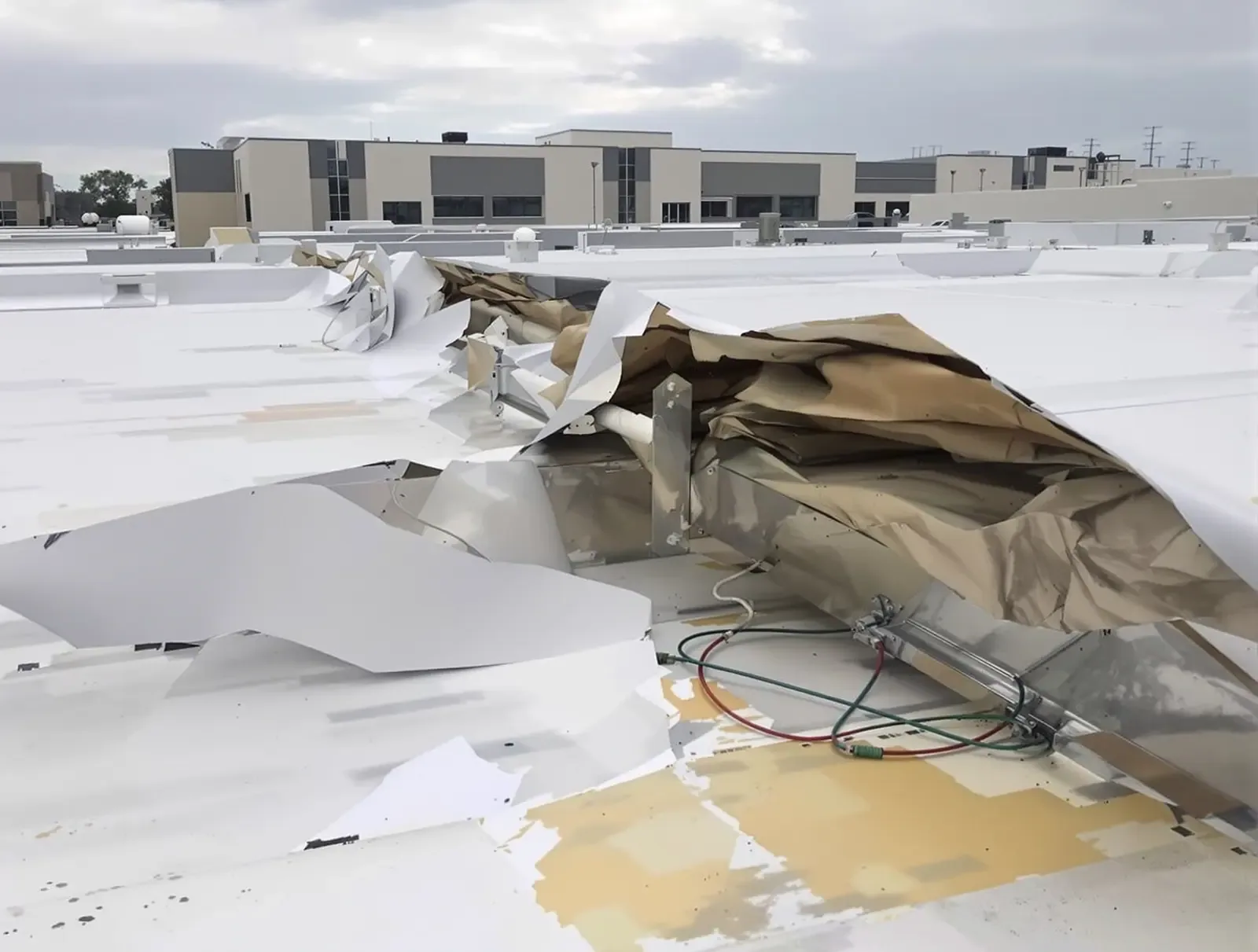
Wind Damage Roof Repair
Repair wind-damaged commercial roofs in Roseville, CA with mapped uplift, edge, seam, and flashing findings tied to the affected roof area.
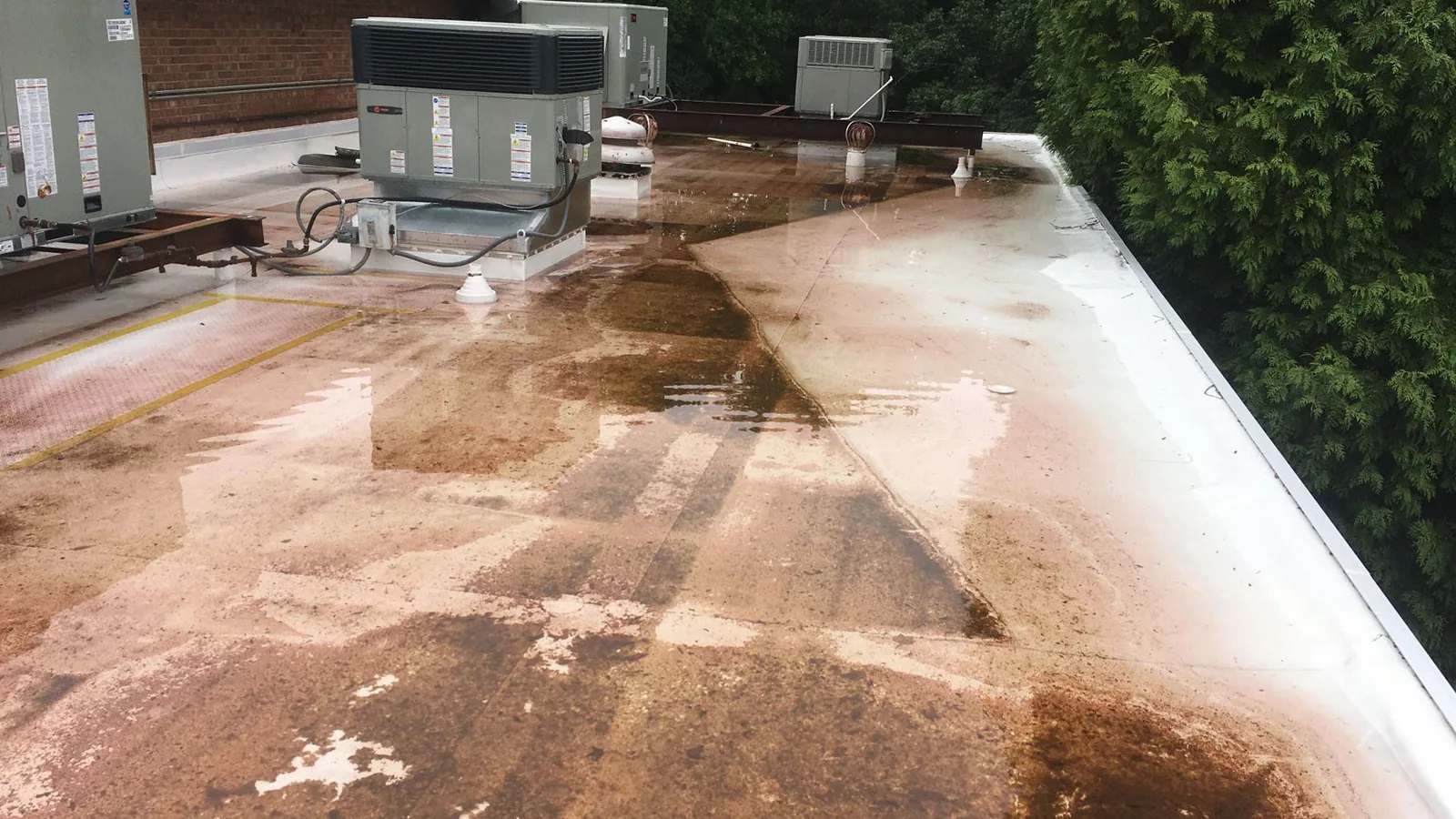
Ponding Water Roof Repair
Correct commercial roof ponding in Roseville, CA by tracing drain paths, checking slope and membrane condition, and documenting the repair boundary.
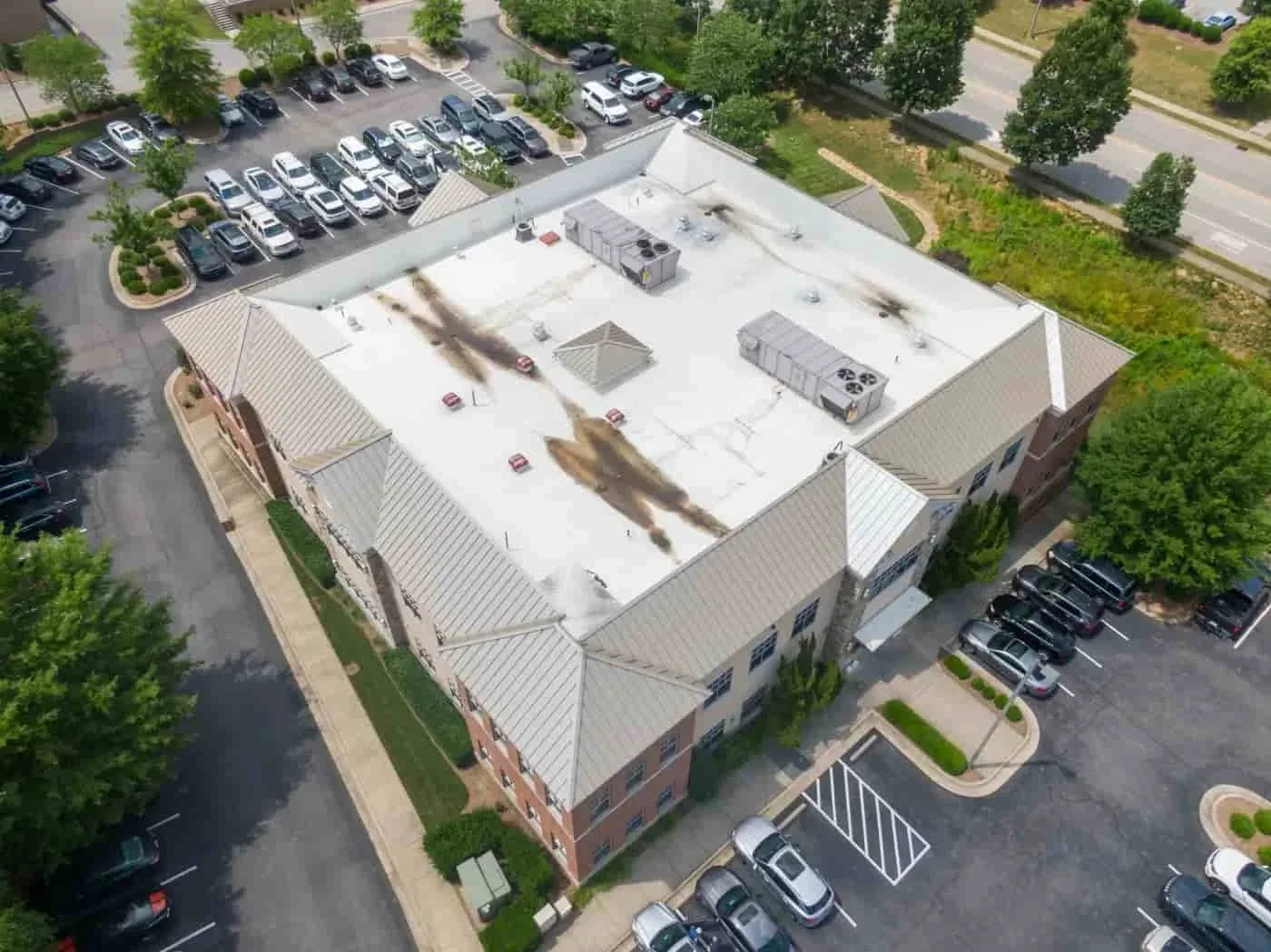
Commercial Roof Flashing Repair
Repair failed commercial roof flashing in Roseville, CA with a traced water path, compatible tie-ins, and a documented repair boundary.
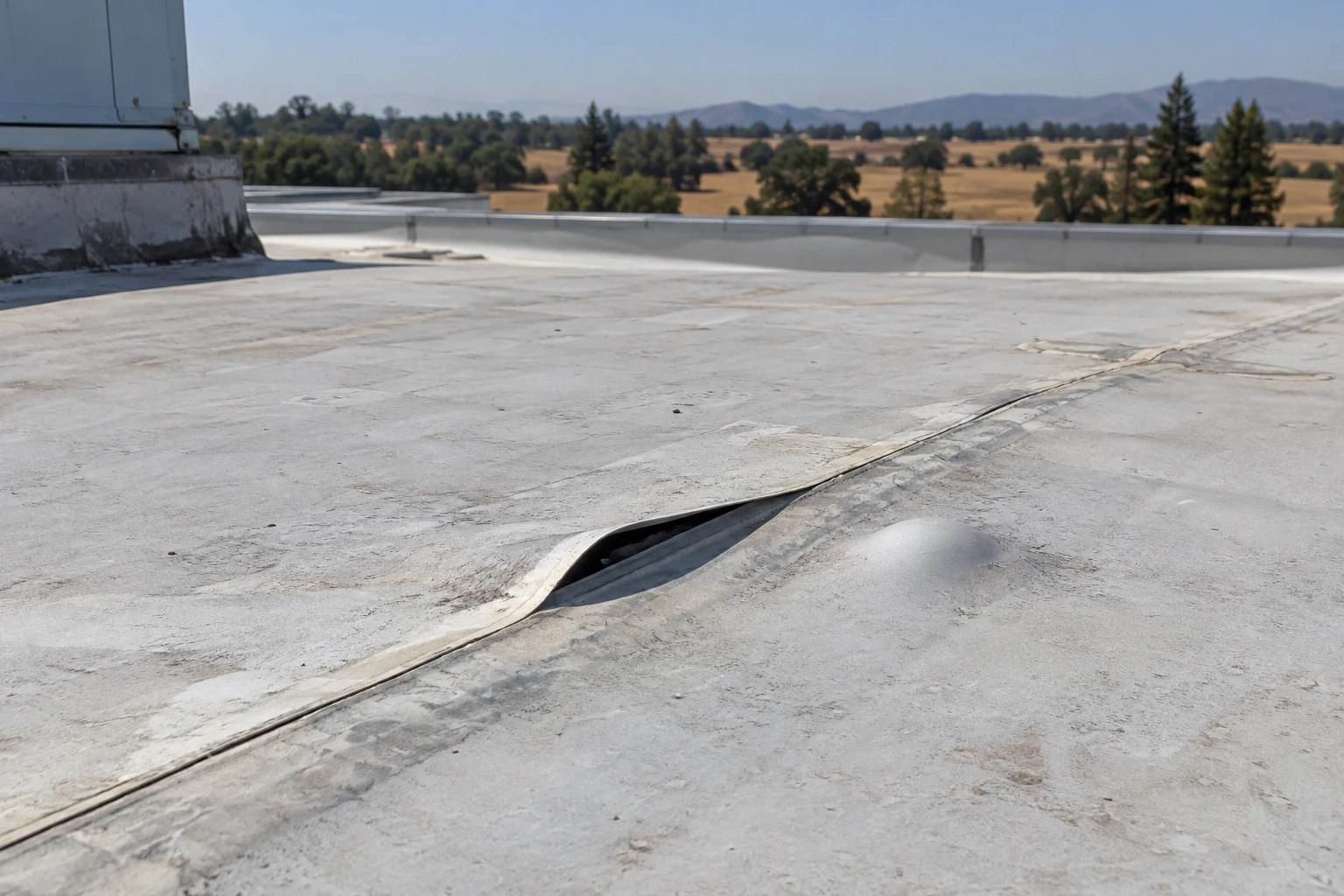
Commercial Roof Seam Failure Repair
Repair open commercial roof seams in Roseville, CA by testing the joint, tracing water entry, and rebuilding a secure, compatible repair detail.
Commercial Roof Membrane Puncture Repair
Repair commercial roof membrane punctures in Roseville, CA with a traced leak path, sound patch tie-in, and inspection of nearby traffic areas.
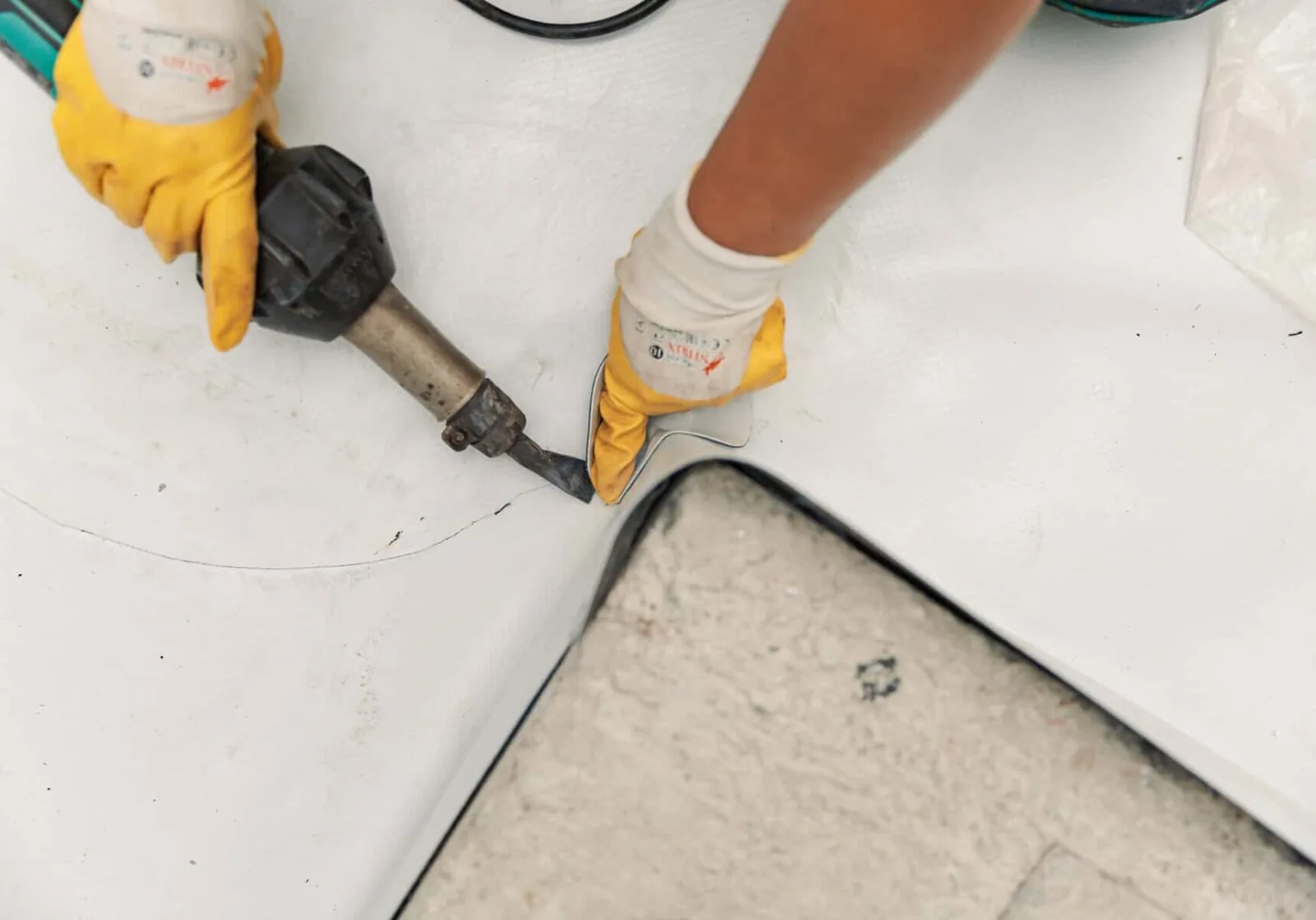
Commercial Roof Fire Damage Repair
Assess commercial roof fire and smoke damage in Roseville, CA with a safe access plan, documented material condition, and phased repair scope.
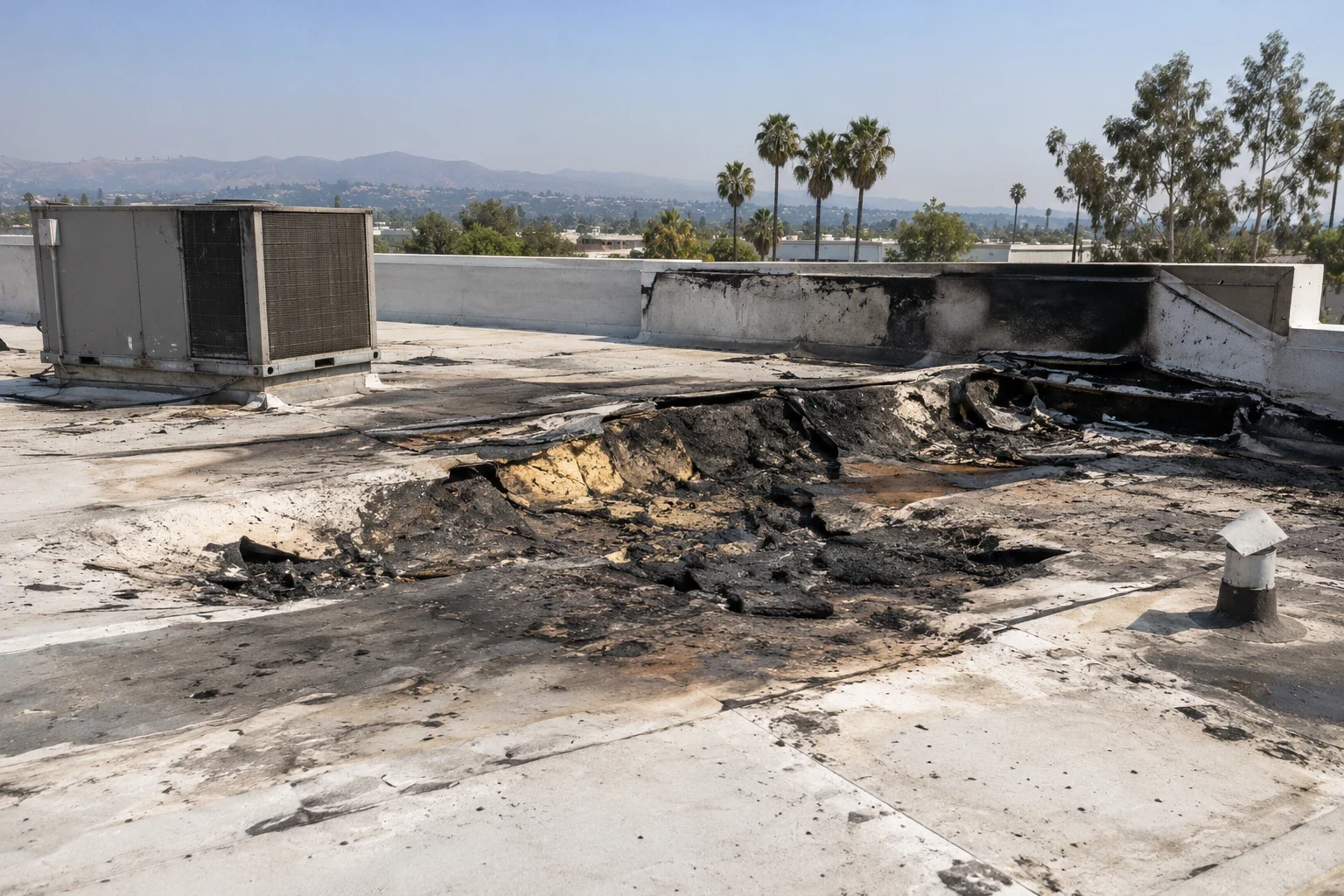
Heat and UV Roof Damage Repair
Repair heat and ultraviolet roof damage in Roseville, CA with a close inspection of membrane, seams, sealants, coatings, and exposed transitions.
Roof Damage Repair
A drain that backs up during the first heavy rain can expose more than a blocked strainer. Water may sit at a low point, reach a weak seam, or move beneath the roof before it appears inside. Roseville's nearby Sacramento Executive Airport normals show a sharp change from nearly rainless July conditions to a wetter January. We inspect the roof and follow the water path before choosing a repair.
More About Roof Damage Repair
Repair options: Trace the entry path and mark the boundary
We compare interior leak reports with the roof plan, then check the membrane, flashing, curbs, edges, drains, and earlier patches. Photos tie the finding to a roof section. If moisture may extend into insulation, an infrared survey or test opening can help define what should be repaired. The proposal distinguishes confirmed damage from conditions that still need testing.
A ponding-water repair may involve drainage, slope, insulation, or another assembly issue. Failed flashing requires a compatible detail at the wall, curb, or penetration. The visible stain alone does not set that scope.
Heat: inspect exposed seams before rain
Sacramento Executive Airport records average July highs above 92 degrees, with about two weeks a year at 100 degrees or more. That is a regional station record, not a temperature reading at a Roseville roof. Summer exposure can age sealant and stress membrane details. A heat and UV damage review looks for surface wear and lifted repair edges, then checks whether the underlying assembly remains sound.
After seasonal rain, follow the drain path and inspect low areas, overflow routes, and adjacent seams. July's normal rainfall at the station is 0.00 inches, while January averages 3.66 inches. We use that contrast to schedule preventive checks, not to diagnose damage without a roof walk.
Repair: match the material to the failure
A seam repair needs compatible preparation and a sound bond beyond the split. A membrane puncture repair should account for the material, size, and condition around the opening. For wind damage, we inspect edges and attachment as well as lifted membrane. A localized patch may be appropriate when the defect is isolated; repeated failures or wet insulation can call for testing or broader work.
Emergency response is available at any hour, including weekends and holidays, to limit active water entry. Once the roof is safe and accessible, we document the affected area and distinguish temporary protection from permanent repair. If a fire affects the roof, a fire damage assessment can record visible conditions and coordinate the roofing scope with the building team's next steps.
Occupied properties: protect the work below
We coordinate a work window, keep entrances protected, and secure the repair area before leaving. At a facility in Roseville, that can mean mapping roof access and staging with the site contact before the crew arrives.
If a repair does not hold, the next step is to review the repair edge, surrounding membrane, and water path. Repeating a patch without checking those conditions can miss wet insulation or an attachment problem. A condition record makes it easier to see whether the failure is at the same location or has moved to another detail.
Inspection findings: Choose the next inspection or repair
Bring leak timing, previous repair records, and roof drawings if available. We will identify the damaged area, document what needs confirmation, and outline a repair boundary with a practical next action. For broader planning, keep the condition record with the maintenance file and compare it during the next roof review.
Commercial Roofing Questions
What should we do when water appears inside during a storm?
Protect people and equipment, record where water appears, and contact us for urgent response. We will assess safe access, limit active entry, and document what should be checked for permanent repair.
Can ponding water be fixed by adding a coating?
A coating does not correct a blocked drain, inadequate slope, or wet insulation. We inspect the drainage path and substrate before deciding whether coating belongs in the repair scope.
Why would a patched seam leak again?
The repair may have stopped short of sound material, or moisture and movement may extend beyond the visible split. We inspect the tie-in and nearby assembly before repeating the work.
Does wind damage always require a full replacement?
Not necessarily. We check attachment, edges, seams, and insulation extent, then document whether a limited repair or broader project is supported.
Related Roofing Pages
Jump to another section of the site.
Plan the Roof Work for Your Building
Tell us about the building and what you are seeing on the roof. 555-555-5555