
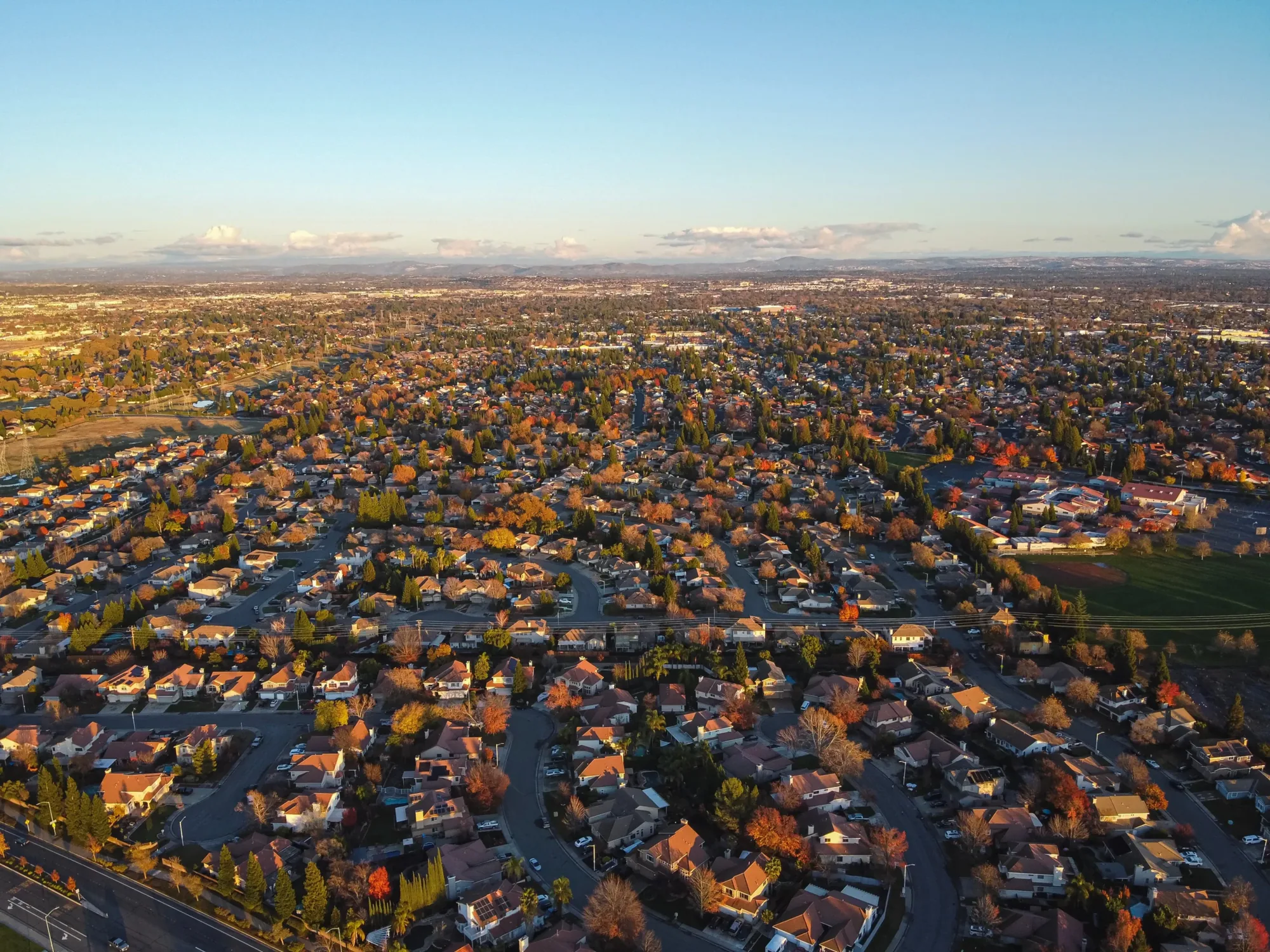
Roseville in Roseville, CA
Roseville buildings sit across commercial, industrial, office, and residential planning areas, so a roof visit starts with the use below it and the assembly above it. We inspect seams, drains, penetrations, and perimeter details, then mark what needs repair and what can remain. A nearby climate station records hot, dry summers followed by wetter winter months. That regional pattern makes it practical to clear drain paths and document exposed details before the rainy period returns.
Inspection record: Start with the roof map
A facility director needs a map that makes a repair location easy to find again. We divide each roof into labeled areas, mark leak reports, and photograph the surface, edges, drains, curbs, and transitions. If there are several roof levels or additions, each one gets its own identifier. The map should show the relationship between a ceiling stain and the nearest roof features, while leaving room for water to travel beneath a membrane before it appears indoors.
Roseville's planning framework includes commercial, industrial, office, and residential uses. That mix is a reason to document the actual building, not assume one roof type from its neighborhood. A production space may have equipment curbs and service routes; an office roof may have a different access plan. We record what is visible, note what is concealed, and identify whether testing or an opening would resolve an uncertainty. The resulting roof condition report supports repair approval and later budget comparisons.
Climate risk: Prepare for the dry-to-wet shift
At Sacramento Executive Airport, the nearby 1991-2020 normals show mean daily highs of 92.6 degrees Fahrenheit in July and 91.9 in August. The same record averages no July precipitation and 3.66 inches in January. Those numbers describe the airport station, not a Roseville roof, but the seasonal contrast helps set inspection timing. We check exposed seams, flashing, and patches during dry weather, then confirm drains and overflow routes are open before the wetter months.
A dry roof can still be accumulating damage.
Heat, foot traffic, equipment service, and open details may wear different areas at different rates.
We photograph conditions rather than infer a failure from the season.
If a leak appears after rain, we trace the likely path from the interior mark to roof details, inspect nearby drains, and check previous repairs.
The next decision is whether a localized repair can hold or whether wet insulation and repeated defects require a broader scope.
Our commercial roof inspection records those distinctions.
Repair options: Choose repair, recover, or replacement
A repair is sensible when the affected area is limited and the surrounding assembly remains serviceable. We verify the membrane, prepare the repair surface, and define a boundary that can be checked later. If damage repeats at seams, drains, or penetrations, the inspection should determine whether those are isolated details or symptoms of a larger assembly issue. An overlay may be possible only when existing layers, moisture condition, deck, and project requirements support it. A tear-off becomes a clearer option when the roof cannot provide a sound base for new work.
For commercial reinvestment planning, Roseville names Atlantic Street, Douglas-Harding, and Douglas-Sunrise as focus corridors. That planning context does not tell us what a particular building needs, but it can help an owner coordinate roof work with a larger improvement schedule. We separate immediate water control from capital replacement, then show what evidence supports each recommendation. Compare a replacement scope with a recover option only after checking the roof layers and wet areas.
Insulation changes can affect drains, parapet height, and transitions at roof edges. We note those relationships before comparing bids, because a new layer can alter water paths or leave a flashing too short. If a recover cannot meet the project details without trapping moisture, that limitation belongs in the scope. A replacement plan should identify temporary protection and the work sequence for each roof area.
Operations: Plan access around the building
Roof work affects more than the roof. We identify hatch or ladder access, service routes, loading activity, equipment clearances, and areas where a crew cannot stage. On an occupied property, the work plan should state which doors remain open, how materials reach the roof, and how temporary dry-in will be handled if weather interrupts installation. If HVAC or other rooftop equipment needs service during the project, coordinate that route before new membrane is installed.
City policy gives the North Industrial subarea a major employment role in South Placer, without describing any one facility. Facilities in that broad area may have operating constraints that differ from a downtown office, but the site contact must provide the actual schedule and access restrictions. We do not assume a facility's production hours or equipment needs from its location. The roof walk records what is present and who needs notice. For work in the commercial corridors or North Industrial Area, build those details into the sequence rather than treat access as a last-minute issue.
Inspection findings: Keep the next inspection useful
A maintenance record works when the next person can compare the same locations. We keep area names consistent, attach photos to the map, and note whether a seam, curb, or drain received repair. After work, the owner should know which areas need observation, which drains need routine clearing, and what conditions should trigger a call. If a roof is not ready for replacement, a monitoring plan gives the budget team a way to track change rather than rely on memory.
Maintenance should follow the assembly and operating conditions.
A single interval does not fit every building.
We look at repair history, ponding, equipment work, and how often people cross the roof, then identify a practical revisit point.
When stormwater has been present, check strainers, sumps, overflow routes, and flashing at low areas.
If the roof has more than one membrane or a sequence of prior patches, record that before applying new material.
A maintenance plan can prioritize small repairs that protect the larger capital decision.
Repair options: Get a scope tied to field evidence
Before a site review, gather roof plans, leak locations, recent repair records, and access restrictions. We inspect visible surfaces and details, connect findings to interior reports, and identify where moisture testing or design input is warranted. The written scope should say what will be repaired or removed, how the deck and insulation will be checked, and what approval is required if concealed conditions change the job.
Schedule a Roseville roof review and tell us which area is affected, when water appeared, and what building operation cannot stop. We will return a roof map, photos, repair boundaries, and a clear recommendation. If a larger project is not ready for procurement, the same record can support a phased budget and a focused follow-up inspection. Use the Downtown Roseville and West Roseville district pages for broader context, while keeping the assessment specific to the property.
Commercial Roofing Questions
What does a commercial roof review in Roseville document?
We map roof areas, seams, drains, penetrations, edges, visible moisture clues, and reported leak locations. Photos and a repair boundary make recommendations easier to verify.
Can hot, dry summers damage a commercial roof before it leaks?
The regional station records substantial summer heat, but the building's exposure and assembly decide what is present. We inspect surface, flashing, and repairs instead of inferring damage from the season.
When should Roseville facilities check drains?
Before the wetter winter period, clear strainers and confirm overflow paths. If water remains after a storm, map the low area and check whether blockage, slope, or a detail is involved.
What information helps price a reroof accurately?
Roof plans, assembly records, moisture findings, access limits, and detail conditions reduce assumptions. The proposal should identify attachment, insulation, flashing, drainage, and concealed-condition approvals.
Related Roofing Pages
Other pages that cover related roofing work.
Schedule a Roseville commercial roof review
Share the affected roof area, recent leak timing, repair records, and building access limits. We will map visible conditions and identify the repair or project decisions that need attention. 555-555-5555
Commercial Roofing in Roseville, CA FAQs
Common questions about this topic for Roseville commercial buildings.
What does a commercial roof review in Roseville document?
We map roof areas, seams, drains, penetrations, edges, visible moisture clues, and reported leak locations. Photos and a repair boundary make recommendations easier to verify.
Can hot, dry summers damage a commercial roof before it leaks?
The regional station records substantial summer heat, but the building's exposure and assembly decide what is present. We inspect surface, flashing, and repairs instead of inferring damage from the season.
When should Roseville facilities check drains?
Before the wetter winter period, clear strainers and confirm overflow paths. If water remains after a storm, map the low area and check whether blockage, slope, or a detail is involved.
What information helps price a reroof accurately?
Roof plans, assembly records, moisture findings, access limits, and detail conditions reduce assumptions. The proposal should identify attachment, insulation, flashing, drainage, and concealed-condition approvals.