
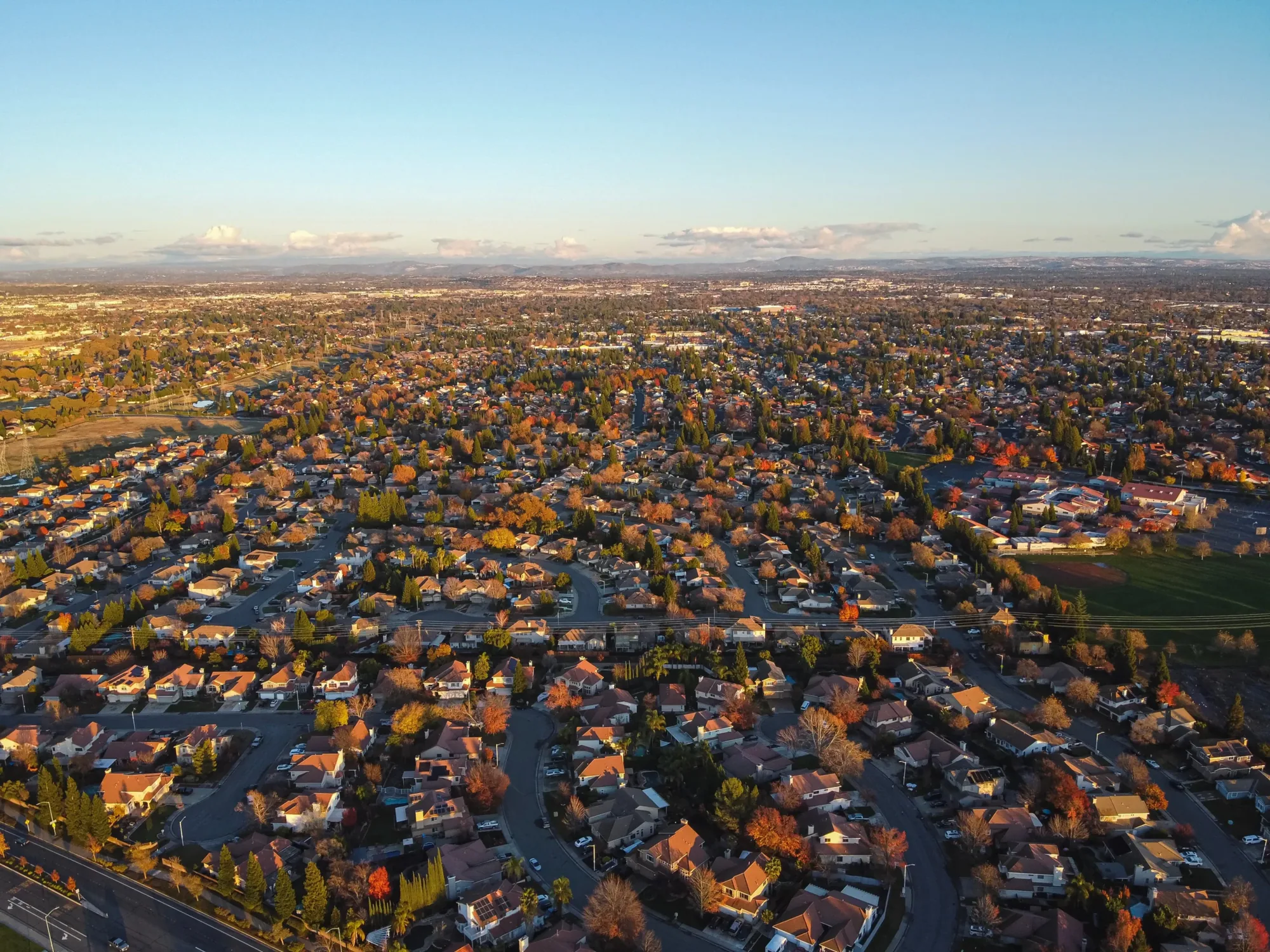
Folsom in Roseville, CA
A new rooftop curb can interrupt drainage or create a flashing detail that must be planned before the unit arrives. For a Folsom property, the roof review should account for the actual assembly and the work scheduled below. Folsom sits within the greater Sacramento region southeast of Placer County's Sunset Area. We inspect the roof, map the water path, and set a repair or construction boundary from what the building shows.
System review: identify the roof before pricing
We begin with drawings, repair invoices, and any prior roof survey. Then we compare those records with visible membrane, metal, seams, edges, and penetrations. An earlier coating or overlay can hide the original system, while a later equipment change can alter drainage and access. The inspection notes which layers are known, where the tie-ins sit, and where a test could change the recommendation.
A commercial property file should show more than the membrane name. We label roof areas, record drains and overflow paths, photograph curbs and wall flashings, and mark defects that need repair. If the owner is considering a purchase or budget request, a due-diligence roof survey can make confirmed conditions and unresolved questions easier to compare. Each finding connects to a location on the roof map rather than a general condition grade.
Leak history is useful when it includes dates, rooms, weather, and prior work. We trace a reported stain to seams, penetrations, parapets, and outlets that could move water toward the interior. Soft insulation, surface staining, and a thermal pattern are indicators to investigate; they do not set the moisture boundary alone. We identify whether the next question can be answered from above or needs a targeted opening.
Calendar: use the dry stretch for roof checks
At Sacramento Executive Airport, July precipitation averages zero, while January records 3.66 inches in the 1991 to 2020 normals. The dry stretch gives a practical window to check flashing and drainage before the wetter months. We inspect old patches, open laps, curb corners, and penetrations while those details are accessible. A split that stays dry in summer can admit water after rain returns.
About fourteen days in the Sacramento Executive Airport record reach 100 degrees. Its normal high is close to 93 in July and 92 in August. We inspect sealant, exposed membrane, and edge details for brittleness or movement. The actual surface and its bond determine whether a repair can tie in.
Drainage inspection follows water to its discharge point. We check the roof plane, strainers, bowls, sumps, scuppers, and overflows. A blocked outlet may need maintenance, while standing water after cleaning can point to slope or insulation concerns. A drain and overflow assessment identifies which condition is present before the owner chooses a repair or replacement detail.
Repair path: keep the boundary visible
A local repair fits a limited opening when surrounding material stays attached, dry, and compatible. We prepare the surface and rebuild the failed seam, flashing, or penetration. If a repeat leak appears at the same detail, we check adjacent insulation, movement, and water flow instead of extending a patch without evidence. Photos show the opening and the completed repair boundary.
A recover retains existing roof layers only when the substrate, attachment, and moisture condition allow it. Additional height can affect drains, parapets, equipment curbs, and door transitions. We measure those details before recommending an overlay. If the insulation or deck is damaged, removal may be needed for only part of the roof or for the full system. A recover plan explains which material can remain and how new edges connect to it.
Replacement work includes removal, deck repair, insulation, cover board, attachment, membrane, edge metal, drain work, and flashing. TPO, PVC, EPDM, built-up, and standing-seam systems use different joints and transitions. We match the design to the building requirements and state temporary dry-in, rooftop protection, inspections, and closeout in a replacement proposal. The owner should know how concealed conditions affect the approved scope.
Access plan: sequence trades and deliveries
Roof installation depends on where crews enter, how material is staged, and which spaces below stay active. We confirm delivery routes, noise windows, access controls, and protection before work starts. Equipment service or new curb construction needs a defined order. We coordinate the roof detail with mechanical and electrical work so one trade does not leave another with an open penetration or unfinished edge.
Folsom is part of the greater Sacramento region, whose transportation and business network also supports Roseville and South Placer County. For portfolios with Sacramento or Roseville properties, visits can be placed on a shared calendar. Each roof keeps its own condition record, access limits, and scope approval. Regional scheduling never replaces the field review at the individual building.
When active water reaches an occupied space, emergency response is available every hour, including holidays and weekends. We first protect the interior and document what temporary measure was used. A planned reroof requires a separate calendar for material, inspections, daily dry-in, and return visits. The closeout should show which roof zone is complete and which boundary remains under protection.
Estimate: account for access and unknown layers
Cost varies with access, staging, removal depth, wet insulation, deck repairs, equipment flashing, drainage changes, and perimeter work. We list those components and identify the quantities or drawings the price assumes. If an overlay may conceal layers that change the system choice, a test cut can resolve whether they can stay before the estimate is finalized.
Timing depends on trade coordination, inspections, material availability, and the building's work window. We state what must be settled before mobilization, including curb locations, delivery access, and shutdowns. If replacement proceeds by section, the sequence shows the temporary end condition and the next tie-in. That lets the owner compare repair, recover, and replacement with clear boundaries.
Assessment: prepare the roof file
Send roof plans, prior repair records, leak dates, equipment schedules, and access rules. We will inspect the assembly, map the reported area, check drains and transitions, and photograph the details that set the scope. If a test or additional trade visit is required, the written findings will state what it can confirm.
A condition review before a budget meeting can separate urgent leaks from planned renewal. We note system type, visible wear, moisture indicators, access, and maintenance items. The owner receives an ordered list of roof decisions with repair limits and next steps. Keep the map and closeout photos with the property record so later work can be compared in the same areas.
Folsom's regional context includes the Cordova planning area identified beside the city's corridor, as well as the broader Sacramento market. If a portfolio also includes Rancho Cordova, we can coordinate inspection dates while keeping each building's findings distinct. The roof recommendation remains tied to the property and system inspected.
Commercial Roofing Questions
What records help before a commercial roof inspection?
Roof plans, repair invoices, leak dates, equipment schedules, and prior survey maps help us compare the file with visible conditions. We identify where records and roof details differ.
Can an old roof stay under a new system?
It can when the existing layers and substrate support the assembly and moisture is within the approved scope. We check attachment, drain height, and perimeter transitions before recommending a recover.
How do you decide whether a leak is localized?
We inspect the opening and nearby membrane, insulation, drains, and flashing. The repair remains local only when the surrounding material can support a compatible tie-in.
Why inspect drains before replacement?
A new system changes heights at bowls, scuppers, and overflow details. We confirm the water path and show any adjustment needed to keep the outlet working with the finished roof.
Can service visits for multiple properties be coordinated?
Yes. We can group dates around regional access and operating schedules. Each building receives its own inspection record, repair boundary, and approval path.
Related Roofing Pages
Other pages that cover related roofing work.
Schedule a Folsom commercial roof review
Share the affected area, leak timing, roof plans, and access limits. We will inspect the assembly and document a repair or renewal path tied to the property. 555-555-5555
Commercial Roofing in Folsom, CA FAQs
Common questions about this topic for Roseville commercial buildings.
What records help before a commercial roof inspection?
Roof plans, repair invoices, leak dates, equipment schedules, and prior survey maps help us compare the file with visible conditions. We identify where records and roof details differ.
Can an old roof stay under a new system?
It can when the existing layers and substrate support the assembly and moisture is within the approved scope. We check attachment, drain height, and perimeter transitions before recommending a recover.
How do you decide whether a leak is localized?
We inspect the opening and nearby membrane, insulation, drains, and flashing. The repair remains local only when the surrounding material can support a compatible tie-in.
Why inspect drains before replacement?
A new system changes heights at bowls, scuppers, and overflow details. We confirm the water path and show any adjustment needed to keep the outlet working with the finished roof.
Can service visits for multiple properties be coordinated?
Yes. We can group dates around regional access and operating schedules. Each building receives its own inspection record, repair boundary, and approval path.