
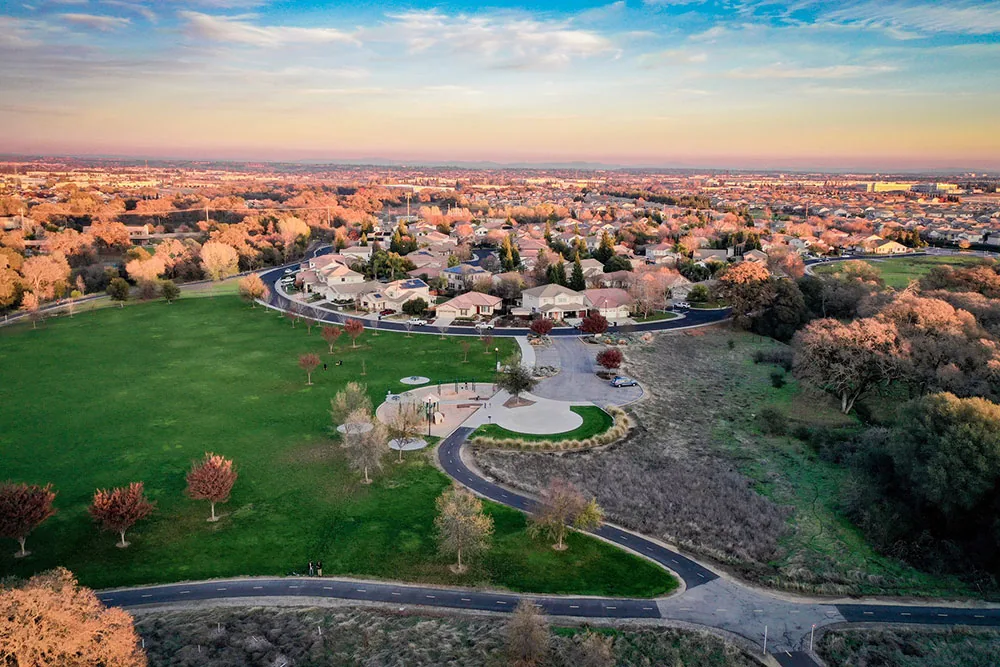
Riverside Gateway in Roseville, CA
A leak at an office curb or a wet seam over a commercial space needs a field answer. Riverside Gateway is a named Roseville planning area with commercial and office uses in the city's land-use framework. We inspect the assembly and operating limits at the property, then map the defect, drainage, and access before setting the repair boundary. A place designation gives the team a location label. The roof walk supplies the condition that controls the work.
First walk: record the water path
Start with the interior report, then follow the likely path above it. A ceiling mark can sit several feet from a roof opening because water moves under the membrane or along the deck. We inspect the nearest curb, lap, penetration, drain bowl, and edge before deciding what connects to the leak. Photos show both the detail and its position on the roof map. That keeps a repair from being priced only at the room where water appeared.
Roseville's plan system sets standards and infrastructure expectations for defined areas. For a commercial or office property, the roof record still needs to name the actual membrane, insulation, attachment, transitions, and prior patches. We identify differences between original and later roof sections. A condition report with photos can separate an active opening from aged material that remains serviceable, and identify the inaccessible detail that needs another visit or a test cut.
We also check drainage as a connected system. A drain strainer can be clear while water still ponds because the bowl is set high, a roof plane has settled, or a previous layer changed the slope. Scuppers and overflow routes matter when the primary drain is obstructed. Our notes identify whether the issue is debris, a failed detail, or a low area that needs a broader review. For a focused review of drains and scuppers, the scope should account for both the outlet and surrounding membrane.
Dry season: make small repairs before rain
Roseville's nearby Sacramento Executive Airport normals show a strong seasonal contrast. July precipitation averages 0.00 inches there, while January averages 3.66 inches. The airport is a regional station rather than a Riverside Gateway gauge. The long dry interval can leave a split at a seam, curb, or pipe boot without an interior symptom. Winter rain can expose the opening after the maintenance window has passed.
The station record includes roughly two weeks each year at 100 degrees or higher. On a roof walk after summer exposure, we inspect sealant, termination edges, membrane laps, and older patches for brittleness or separation. We photograph the detail and test whether adjacent material will support a repair. A loose edge over wet insulation calls for a different boundary than one opening on a dry assembly.
Schedule a maintenance visit before the wet season when drains or details need attention but no broad failure has been confirmed. We clear accessible outlets, check overflow routes, and record low areas that hold water. Cleaning a drain does not correct slope, and a coating does not remove moisture from an assembly. If water remains after the outlet is open, we may need to inspect the insulation or deck before proposing surface work. The report gives the owner a next action tied to what we found.
Repair boundary: separate patch from renewal
A localized repair can fit when one seam or flashing has failed and the surrounding material remains bonded. We identify the system, prepare the surface, and extend the repair into sound material. If nearby patches have lifted more than once, we check for movement, trapped moisture, or a detail that was never rebuilt correctly. The scope states which condition is addressed and which area should be monitored after the next rain.
A recover may retain a stable existing assembly, but added layers affect drains, edge metal, curbs, and thresholds. We check attachment, moisture, and available height before recommending an overlay. If the insulation is wet across several sections or the deck is compromised, removing affected layers may be the more direct route. The proposal should define tear-off limits, insulation, cover board, perimeter securement, penetrations, and tie-ins to any retained roof.
System choice follows the assembly. Heat-welded seams in TPO roofing need compatible membrane and detail work; EPDM, modified bitumen, and metal use different joining methods. A repair scope handles a defined defect. A recover assessment addresses whether a sound roof can support another layer. We compare the options against moisture, drainage, edge condition, and future access, not just the visible wear.
Work window: keep the space below usable
On an occupied office or commercial building, the sequence affects more than roof access. We confirm which entrances and service routes must remain open, where materials can be staged, and whether equipment service needs a separate window. If a trade will move conduit or open a curb, that responsibility should be set before the membrane is cut. The daily plan identifies the active roof section and how the crew will close it against weather at shift end.
Riverside Gateway's place in Roseville's planning framework includes commercial and office uses, but each property team defines its own hours, access rules, and tenant needs. We gather those details directly and include them in the work plan. Temporary protection, debris movement, rooftop equipment access, and notice to occupants all affect timing. If an unexpected opening causes active water entry, our response line is staffed around the clock, including weekends and holidays.
For owners managing properties in other parts of the city, Downtown Roseville, the North Industrial Area, and the commercial corridors can be coordinated within a portfolio schedule. Each roof still gets a separate map, photo set, and scope. Grouping visits can reduce scheduling friction, but it should not transfer one building's membrane condition or repair history to another.
Scope and schedule: price the known work
Access, removal depth, wet insulation, deck repairs, drain changes, edge metal, and equipment protection affect the price and duration. So do occupied hours and staging distance. We itemize those conditions rather than burying them in a single membrane line. If concealed layers are uncertain, a test cut can show what the existing assembly contains before the owner approves a full replacement scope. The proposal should state how additional work is documented and approved.
A Roseville roofing scope should track the city's 2025 California Building Standards Code. We place design coordination, plan review, inspections, and owner approvals beside material lead time and the access window, so the mobilization date reflects the full project sequence.
Commercial Roofing Questions
Does Riverside Gateway's plan designation identify the roof system?
No. We verify the membrane, insulation, attachment, drains, edges, and repair history at the property. The inspection record describes the roof we can see and flags any layer that needs testing.
What should we do when a ceiling stain appears far from a curb?
Water can move below the membrane before it reaches an interior finish. We compare the stain location with seams, penetrations, drainage, and the deck path, then photograph the likely entry area and define what needs confirmation.
Can the work fit around office hours?
We set the work window with the person managing access. Staging, entrances, deliveries, equipment service, noise, and temporary dry-in all shape the sequence for an occupied building.
How do you decide between a repair and a recover?
The deciding details are moisture, bond, attachment, drainage height, and the condition of edges and curbs. We document those items before saying whether the existing assembly can remain under a new layer.
What belongs in the closeout record?
Photos of the finished tie-ins, the repaired area, drainage details, and any remaining observation should be included. We also note the maintenance action and when the owner should review it again.
Related Roofing Pages
Schedule a Riverside Gateway roof review
Share the affected area, leak timing, building use, and operating limits. We will inspect the assembly, map the water path, and document a repair or capital next step. 555-555-5555
Commercial Roofing in Riverside Gateway, Roseville, CA FAQs
Common questions about this topic for Roseville commercial buildings.
Does Riverside Gateway's plan designation identify the roof system?
No. We verify the membrane, insulation, attachment, drains, edges, and repair history at the property. The inspection record describes the roof we can see and flags any layer that needs testing.
What should we do when a ceiling stain appears far from a curb?
Water can move below the membrane before it reaches an interior finish. We compare the stain location with seams, penetrations, drainage, and the deck path, then photograph the likely entry area and define what needs confirmation.
Can the work fit around office hours?
We set the work window with the person managing access. Staging, entrances, deliveries, equipment service, noise, and temporary dry-in all shape the sequence for an occupied building.
How do you decide between a repair and a recover?
The deciding details are moisture, bond, attachment, drainage height, and the condition of edges and curbs. We document those items before saying whether the existing assembly can remain under a new layer.
What belongs in the closeout record?
Photos of the finished tie-ins, the repaired area, drainage details, and any remaining observation should be included. We also note the maintenance action and when the owner should review it again.