
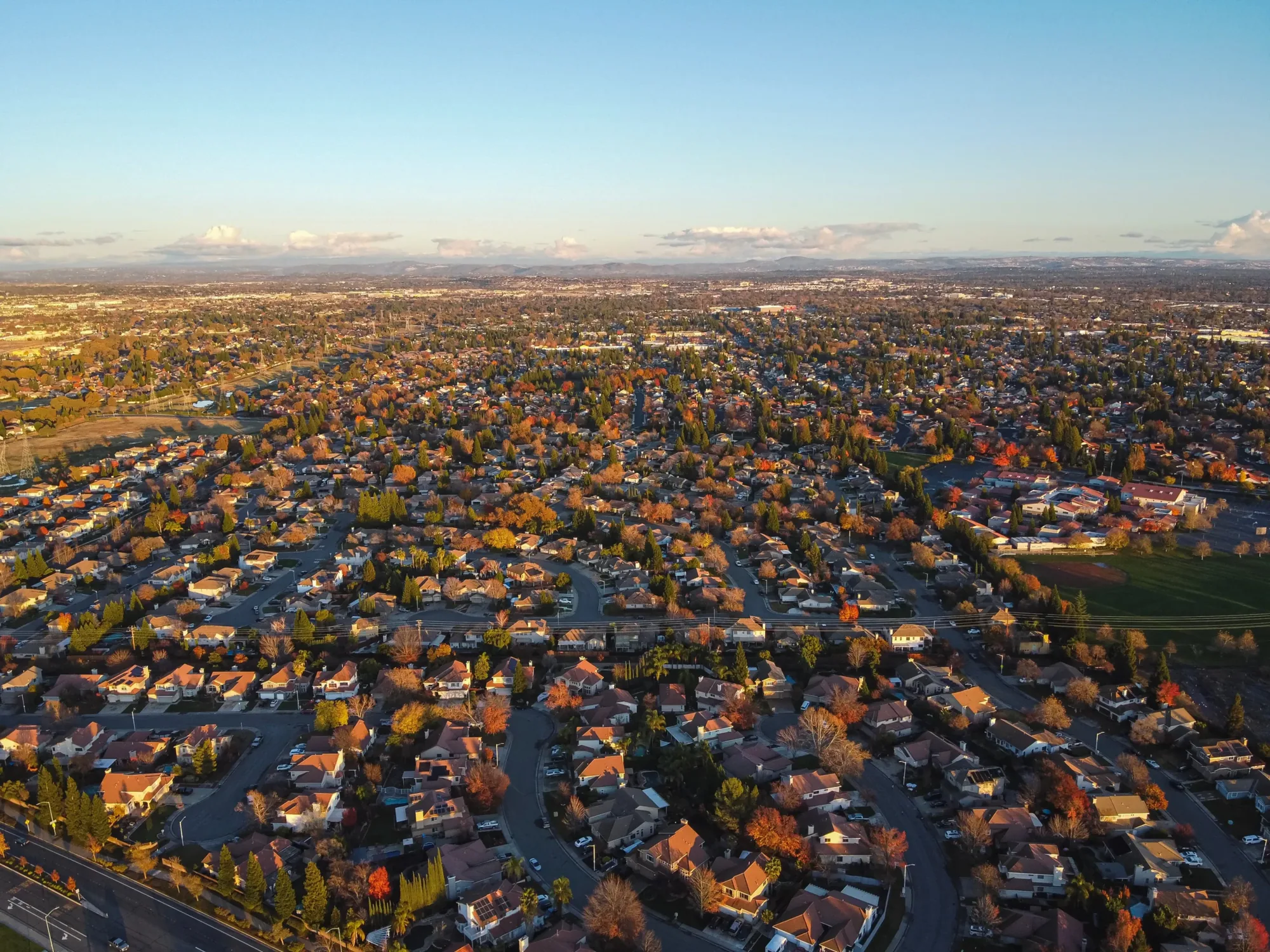
North Roseville in Roseville, CA
North Roseville has a named planning area within the city’s development map. That makes location and project boundaries worth confirming before a property manager groups buildings into one roof program. We review each building’s use, available maintenance records, and access needs, then inspect the roof section by section. A leak repair, a drainage correction, or a capital replacement may be right for different parts of the same property. The field condition decides the scope.
Dry stretch: close the small openings early
The nearby Sacramento Executive Airport station provides a regional climate reference, not a reading from a North Roseville roof. In the 1991 to 2020 record, January averages 3.66 inches of rain while July is typically dry. During that long summer pause, a narrow split beside a curb or seam may not show an interior stain. It can still let water into insulation, the deck, or finished space when the wet season returns.
We inspect laps, perimeter details, pipe flashings, drain bowls, and overflow routes before seasonal rain. A repair needs a clear boundary: a surface patch may leave an exposed edge unsecured or a nearby drainage issue untouched. We check bond and insulation condition before deciding what can stay. A scheduled maintenance interval lets the facility team address small defects before they interrupt operations. Regional weather supports planning; it cannot diagnose a specific roof.
Heat also affects the details owners can see during a walk. Sacramento Executive Airport normals record July and August mean daily highs above 91 degrees and about fourteen days each year at or above 100. Those measurements belong to the station. On a roof, high summer exposure can stress sealants, boots, and old repair edges. We photograph those transitions and note which materials are still flexible, which have separated, and what would need a compatible tie-in.
Roof record: divide the property into sections
Roseville’s planning inventory distinguishes North Roseville from North Industrial, Northwest Roseville, and other defined areas. The maps are useful for naming the site and coordinating records. They do not tell us whether an individual building has a single-ply membrane, metal panels, multiple additions, or a history of recover work. We verify the assembly on site and note differences between original roof sections and later tie-ins.
A written roof condition report should show more than a list of leaks. We map drains, scuppers, roof edges, curbs, penetrations, and repair patches. We mark active water entry separately from aged materials that remain watertight. If access is restricted or a mechanical unit blocks a detail, that limit belongs in the record. The facility director can use the map to authorize a focused repair now and set a date to inspect the blocked area.
Where water appears inside is not always where it entered. It can travel under a membrane, follow the deck, or collect beside a curb before reaching a ceiling. We trace the likely path instead of pricing a patch from the interior stain alone. For a leak near a drain, the inspection checks the bowl, strainer, surrounding membrane, overflow, and nearby seams. A clear photo set lets the owner compare what changed after repair.
Assembly: choose repair, recover, or replacement
A localized repair can extend a sound assembly when the defect is isolated and the surrounding membrane still accepts a compatible tie-in. Wet insulation, repeated seam failures, widespread bond loss, or a damaged deck can change that choice. We inspect representative areas and confirm the layers before proposing an overlay. A recover can add height and affect drains, door thresholds, equipment curbs, and edge metal, so the details need to work together.
Replacement scopes should name more than a new membrane. We identify tear-off limits, deck repairs, insulation, attachment, perimeter securement, drainage adjustments, penetrations, and protection for occupied space. TPO and PVC use heat-welded seams; EPDM has a different seam and flashing method. Modified bitumen and metal need their own edge and transition details. A system description should match the field conditions and design, not simply repeat a preferred product name.
For a sound roof with a defined defect, commercial roof repair may be the direct answer. Owners considering EPDM or another membrane can compare seam methods, maintenance access, and future rooftop work. A replacement scope becomes more useful when several sections have reached the same condition or the existing layers prevent reliable repair.
Occupied work: set a practical sequence
We ask what must remain open before setting a work window. A retail tenant, office team, loading dock, or production area may have a delivery or equipment schedule that controls roof access. The crew plan identifies staging, movement across the building, debris handling, and the areas below the work. If an HVAC unit needs a shutdown or a trade must move a line, that coordination belongs in the sequence before material is removed.
When several buildings need attention, we group work by access and urgency while keeping each roof scope separate. That can address active leaks first without treating every section as an emergency. A daily closeout records temporary protection, completed tie-ins, and any area that needs a return visit. For an unexpected opening or active interior water entry, our emergency line is answered around the clock. Planned replacement receives a schedule that fits the property’s operations.
We can document hard-to-reach areas with a drone and use infrared scanning to identify patterns that need a closer look. Those tools point to areas for confirmation; they do not replace a physical assessment of accessible materials. The report states what was observed, what could not be checked, and the next step. The record gives the facility team a consistent basis for maintenance, tenant notices, and future capital planning.
Scope and timing: make constraints visible
Roof access, tear-off depth, deck condition, wet insulation, edge metal, drainage work, and equipment curbs all affect the final scope. So do occupied hours and material staging. We separate these items in the proposal instead of hiding them in one line. When hidden layers are uncertain, a test cut can establish what the existing assembly contains. That limits the risk of pricing a replacement around an assumption.
Some roof projects need city approval before construction, while qualifying work can fall under an exemption. Roseville accepts permit applications and supporting technical documents through digital submission. We identify the applicable review path early, then allow for design details and owner authorization in the schedule. The schedule also needs space for weather protection, inspection, and a documented closeout.
Properties near North Industrial and Northwest Roseville can share a reporting format while retaining separate photos and repair boundaries. A portfolio record works best when each building has its own roof map and assembly history. Facility teams can then compare immediate leak control with planned replacement without losing which condition belongs to which roof. See how office roof planning, North Industrial service, and the wider Roseville area fit into a property maintenance program.
Commercial Roofing Questions
Does North Roseville's planning map identify my roof system?
No. The planning inventory names the area and its plan framework. We inspect the roof and available records before identifying the membrane, insulation, attachment, or repair history.
How can a roof leak stay hidden through summer?
A split seam or curb detail may admit little water during a dry period. Winter rain can expose it. We inspect the opening and nearby drainage, then document whether the substrate is wet or the defect remains localized.
Can several roofs be included in one service plan?
Yes, if each building keeps its own condition record and schedule. We can sequence visits and repairs together while tracking the assembly, access, leak history, and repair boundary for each roof separately.
What goes into a replacement scope?
We identify removal limits, insulation, deck work, membrane attachment, edges, drains, curbs, and occupied-space protection. The proposal also records access and schedule limits so the owner can compare complete scopes.
Can you respond to active water entry overnight?
Emergency calls are answered around the clock. We assess the reported area, protect the building where practical, and document the condition. A permanent repair follows after the roof assembly and moisture extent are confirmed.
Related Roofing Pages
Other pages that cover related roofing work.
Schedule a North Roseville roof assessment
Share the building use, affected area, leak timing, and any access limits. We will inspect the assembly, record the findings, and outline a repair or replacement scope. 555-555-5555
Commercial Roofing in North Roseville, CA FAQs
Common questions about this topic for Roseville commercial buildings.
Does North Roseville's planning map identify my roof system?
No. The planning inventory names the area and its plan framework. We inspect the roof and available records before identifying the membrane, insulation, attachment, or repair history.
How can a roof leak stay hidden through summer?
A split seam or curb detail may admit little water during a dry period. Winter rain can expose it. We inspect the opening and nearby drainage, then document whether the substrate is wet or the defect remains localized.
Can several roofs be included in one service plan?
Yes, if each building keeps its own condition record and schedule. We can sequence visits and repairs together while tracking the assembly, access, leak history, and repair boundary for each roof separately.
What goes into a replacement scope?
We identify removal limits, insulation, deck work, membrane attachment, edges, drains, curbs, and occupied-space protection. The proposal also records access and schedule limits so the owner can compare complete scopes.
Can you respond to active water entry overnight?
Emergency calls are answered around the clock. We assess the reported area, protect the building where practical, and document the condition. A permanent repair follows after the roof assembly and moisture extent are confirmed.