
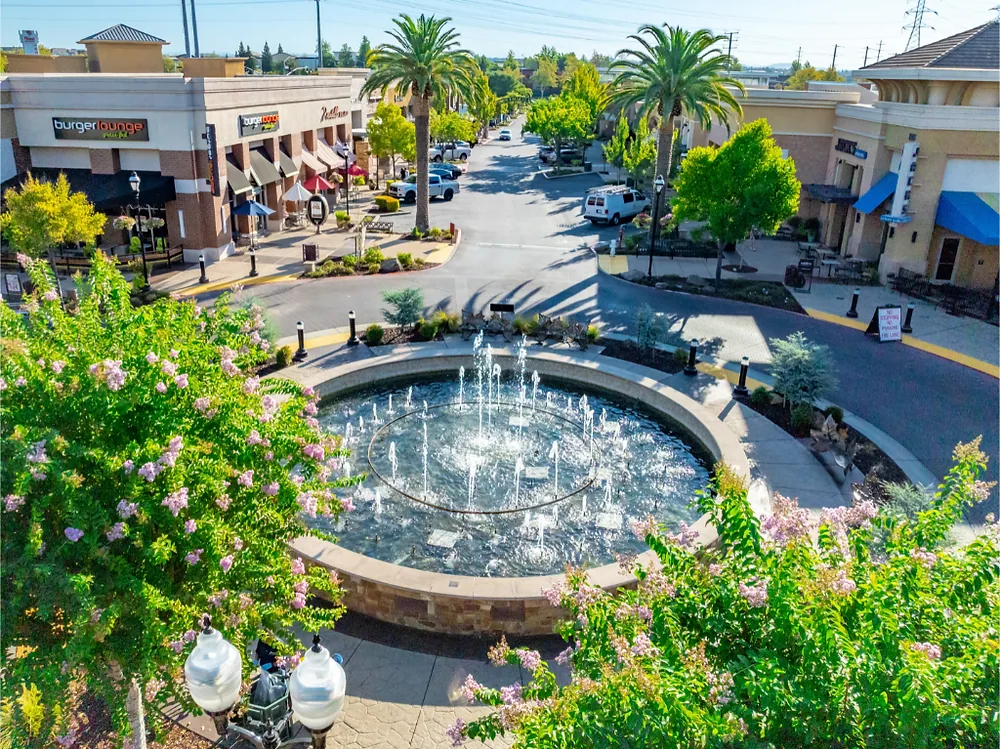
McClellan Park in Roseville, CA
A roof over an active business needs a repair plan that protects the work below it. McClellan Park is a broad former-airfield business and employment district in the Sacramento region, with North Highlands and Foothill Farms nearby. We inspect the actual roof assembly, map drainage and penetrations, and record where a leak begins or a detail has opened. The district name sets the service area; the building inspection sets the scope.
Repair options: Read the details before choosing a repair
At a roof walk, we check membrane seams, flashing at curbs, parapet terminations, edge metal, drain bowls, and prior patches. A visible split may be one part of a larger failure if the sheet has pulled from its attachment or water has moved into insulation. We photograph each detail and tie it to a roof section. That makes the repair boundary clear to the owner and gives the crew a defined tie-in.
Interior leak reports help narrow the search, but water can travel before it shows. We compare the stain with roof transitions and drainage, then decide whether a surface repair, moisture survey, or test opening is appropriate. Infrared readings can help locate temperature differences associated with moisture; they need to be interpreted alongside the roof and confirmed where the assembly calls for it. A commercial roof inspection creates the baseline, and a photo condition report records the evidence and next action.
Climate risk: Check exposed surfaces before the wet season
The nearby Sacramento Executive Airport normals show July mean daily highs of 92.6 degrees and August highs of 91.9 degrees. About 14 days in an average year reach 100 degrees or higher at that station. Sacramento Executive Airport is the nearby regional station used for this climate comparison. The same record averages no measurable July precipitation and 3.66 inches in January, a dry-summer to wet-season shift that makes neglected seams and drain details worth checking before winter storms.
Heat can age exposed sealants and stress transitions as roof materials expand and contract. We look for cracked caulk, open laps, loose edge metal, scuffed traffic paths, and patch edges that no longer lie flat. Then we trace how water should reach each drain and overflow. A low area that remains wet deserves a separate note from a clogged strainer. A maintenance visit before the rainy season can identify small corrections and flag issues that need a larger investigation.
Operations: Set access and staging before materials arrive
McClellan Park spans an employment district rather than one property. The surrounding North Highlands and Foothill Farms community-plan area has urban land uses, and county planning describes adjacent uses as developed in support of the former McClellan Air Force Base. Those place facts do not establish what a particular business does, how its roof is built, or whether a project is underway. We verify site operations directly and build those limits into the work plan.
For an occupied business, identify the roof entrance, lift or crane position, material drop, protected walkways, and any delivery hours that cannot move. Confirm who can release equipment shutdowns and who needs notice before noisy work. Temporary dry-in is set for each open section, and each shift ends with exposed edges secured against weather. For larger properties with more than one roof area, label each section on a site map rather than relying on informal directions. That record makes coordination among facility contacts, trades, and the roofing crew more precise.
McClellan Park and North Highlands/Foothill Farms form useful geographic references for dispatch and portfolio records, but they should not be used as a substitute for an access plan. We walk the property, confirm the route, and note any roof areas that can only be reached under an escort or operating window arranged by the owner. A phased occupied-building reroof can keep those limits visible from the first section through closeout.
System choice: Compare a patch with a system decision
Repair is usually the first option when damage is isolated and surrounding material remains stable. We remove loose material, prepare the substrate, install a compatible patch or flashing repair, then photograph the finished edge. When leaks return at several locations, the owner may need to understand moisture extent before authorizing another surface fix. Repeated repairs can address symptoms while leaving a larger wet area untouched.
A recover may be suitable where the existing roof is dry, secure, and able to accept added weight and height. If insulation is wet, attachment is failing, or the deck needs review, covering the assembly can hide the condition. A tear-off exposes the layers and allows replacement, but brings added disposal, staging, and protection requirements. Coating also depends on substrate condition, cleaning, adhesion, and sound details. We compare a repair scope, recover, and replacement only after the roof is mapped.
Cost changes with roof area, number of curbs and transitions, insulation findings, material choice, access, crane or lift needs, and the amount of protection required below. Schedule depends on approvals, delivery access, weather, and whether the building can release each work zone. A useful bid calls out those drivers and sets a clear approval step for concealed damage.
Next step: Treat the perimeter as part of the roof
Water can enter where the field membrane meets a parapet, metal edge, curb, skylight, or drain. We examine those junctions with the main roof surface because a patch in the field will not correct a failed termination. At metal roofs, fasteners, panel laps, and transitions need a different repair approach than a single-ply membrane. We identify the installed system before choosing materials.
When replacement is on the table, review insulation, cover board, attachment, membrane, edge securement, and drainage together. Added insulation may change the height at a wall or drain; the detail must preserve water flow and secure the new assembly. Rooftop units and conduits need planned flashing, and existing supports may require coordination. The closeout review checks seams, corners, penetrations, and drain transitions.A review of roof-edge and coping components can be part of the mapped scope when movement has loosened perimeter details.
Inspection findings: Make the condition record useful after the visit
Bring roof plans, previous repair records, leak dates, and any access restrictions to the review. We will label roof areas, photograph defects, follow drainage, and note where moisture testing or an opening may be useful. The written result should separate observed damage from conditions that need further evaluation. It should also distinguish immediate leak control from maintenance and capital work, so the owner can set budget and timing without combining unlike scopes.
For an employment property in McClellan Park, tell us which work areas need protection and who controls roof access. If a roof system serves several tenants or functions, mark the affected space and any shutdown constraint. We will return a roof map, condition notes, and a defined next step. When comparing a building near North Highlands and Foothill Farms with one in Roseville, keep each facility's inspection tied to its own membrane, details, and operating plan.
Commercial Roofing Questions
Does the former-airfield history tell us what roof a McClellan Park building has?
No. McClellan Park is a broad employment district, and nearby land-use history does not establish a particular property's roof system or condition. We identify the assembly during the site review.
What helps you locate a leak that appears far from the roof opening?
The interior stain location, leak timing, roof plan, and prior repairs help us trace possible water paths. We compare those records with seams, penetrations, drains, and transitions, then mark any area that needs testing.
Can a coating solve repeated leaks around several roof details?
Only if the existing assembly is suitable and the preparation and details support the coating system. Wet insulation, failed attachment, or open transitions need separate correction before restoration is considered.
How do we keep roof work from interrupting business operations?
Set the access route, staging area, delivery window, protected entrances, and equipment needs with the facility contact. We sequence work by roof section and secure each exposed edge at the end of the shift.
Related Roofing Pages
Arrange a McClellan Park roof assessment
Tell us where the leak appeared, when it started, and which operating areas need protection. We will map the roof, photograph the details, and outline the next repair decision. 555-555-5555
Commercial Roofing in McClellan Park, Sacramento, CA FAQs
Common questions about this topic for Roseville commercial buildings.
Does the former-airfield history tell us what roof a McClellan Park building has?
No. McClellan Park is a broad employment district, and nearby land-use history does not establish a particular property's roof system or condition. We identify the assembly during the site review.
What helps you locate a leak that appears far from the roof opening?
The interior stain location, leak timing, roof plan, and prior repairs help us trace possible water paths. We compare those records with seams, penetrations, drains, and transitions, then mark any area that needs testing.
Can a coating solve repeated leaks around several roof details?
Only if the existing assembly is suitable and the preparation and details support the coating system. Wet insulation, failed attachment, or open transitions need separate correction before restoration is considered.
How do we keep roof work from interrupting business operations?
Set the access route, staging area, delivery window, protected entrances, and equipment needs with the facility contact. We sequence work by roof section and secure each exposed edge at the end of the shift.