
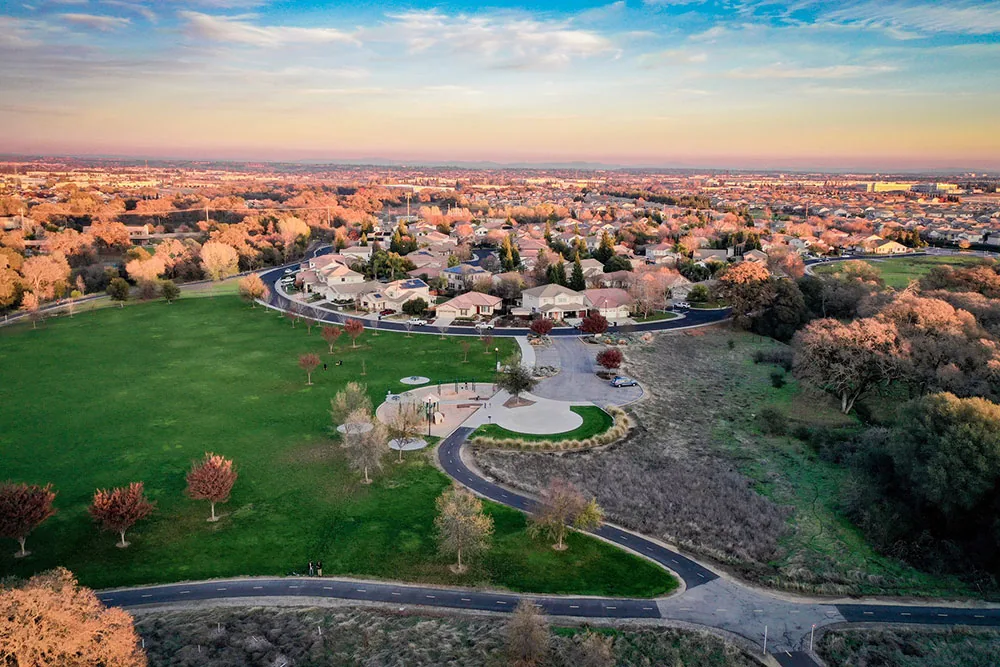
Granite Bay in Roseville, CA
A ceiling stain in a Granite Bay commercial building is only a starting point for roof inspection. Granite Bay is an unincorporated Placer County community in the Roseville area, distinct from the incorporated cities of Roseville and Rocklin. We trace water upward, inspect the roof system, and mark the repair boundary against seams, drains, curbs, and edges. The recommendation follows the building's condition and access, not the community name.
Roof walk: separate visible wear from active failure
A stain can travel away from the opening that admitted water. We start with the leak location and timing, then inspect the roof plane above it and the nearest transitions. Seams, wall flashings, pipe penetrations, equipment curbs, and roof edges each create a different water path. We photograph the detail and label its location on a roof map so the owner can connect the interior report to work overhead.
Placer County provides property and zoning assistance for unincorporated communities such as Granite Bay. That is useful context when a project changes use or adds construction; roof assembly and condition still come from building records and inspection. We compare plans and repair invoices with the material we can see. If the assembly remains uncertain under an overlay, we identify where testing would change the repair, recover, or replacement decision.
Moisture needs a defined boundary before it becomes a larger scope. We check for soft insulation, loose attachment, delamination, corrosion, and staining at penetrations. An infrared survey can point to areas for confirmation, but the visible symptoms and assembly determine whether a test cut is justified. Our condition report distinguishes confirmed defects from questions that need a closer opening or measurement.
Dry summer: use the maintenance window
Normal precipitation at Sacramento Executive Airport averages 0.00 inches in July and 3.66 inches in January. That climate record gives regional timing context for Granite Bay, with dry-season access before winter rain tests old details. We inspect laps, drains, flashings, and previous patches while repair boundaries are easier to reach and document. A small separation may admit little water in summer, then cause a recurring interior report after storms.
The nearby station's normal daily high reaches 92.6 degrees in July and 91.9 in August. Roughly fourteen days each year register 100 degrees or higher there. At the roof, we check sealant, exposed membrane, and repair edges for brittleness or movement rather than assuming that a temperature figure describes the material. A compatible patch needs sound surrounding membrane and enough surface to form a durable tie-in.
Drainage review begins at the roof surface and follows water to its outlet. We inspect the drain bowl, strainer, sump, scupper, and overflow route. If the outlet is clear but water remains in a low area, a cleaning alone will not correct the roof plane. A drainage and overflow inspection identifies whether maintenance, flashing work, or a design question belongs in the next scope.
Repair or renewal: match scope to the assembly
A repair can stay focused when the opening is small and the membrane around it remains attached, dry, and compatible. We prepare the surface, close the failure, and photograph where new material meets old. Repeated splits at one curb or seam call for a wider inspection of movement and trapped moisture. The estimate should show the exact limit of included work and the nearby conditions that remain outside it.
An overlay can preserve an existing roof if its deck, insulation, attachment, and drainage can support another layer. That new thickness changes drain height, edge conditions, and equipment clearance. We verify those dimensions and moisture before recommending a recover. Where removal is needed, the proposal should define tear-off limits and the process for approving concealed deck repairs. A recover evaluation explains what stays and how the new system ties into the retained perimeter.
A replacement scope lists removal, insulation, cover board, attachment, roof membrane, flashing, metal edges, drains, and protection for rooftop equipment. TPO, PVC, EPDM, and modified bitumen do not share the same seam construction. We match system selection to the project design and explain the detail that controls water at each transition. The replacement plan should include staging, daily dry-in, inspection points, and closeout photos.
Building use: set a workable sequence
Before repair starts, we ask where workers can enter, where material can sit, and which areas below must remain accessible. Tenants, deliveries, and mechanical service may restrict the work window. We map those requirements with roof zones and daily closeout so a temporary edge is not left to interpretation. If another trade will move a unit or install a penetration, the roofing sequence must account for it before final flashing.
For unincorporated Granite Bay properties, county property and zoning assistance is part of the broader project context. The building owner and design contact establish which approvals apply to the actual work. We coordinate roofing submittals, access, inspections, and trade timing with that team. If the project also includes Roseville or Rocklin, a shared portfolio calendar can help schedule visits without combining property histories.
Active water entry needs prompt attention, but a temporary cover is not the permanent repair. Our emergency line is answered all hours, every day, including holidays. We record where water entered, what was protected, and what roof-side work remains. For planned reroofing, we also identify where noise, lifts, debris, or blocked service routes affect occupants before choosing a start date.
Estimate: define the repair line and unknowns
Access equipment, removal depth, wet insulation, deck condition, edge metal, drain work, curb flashing, and occupied-space protection all affect cost. We state which items are included and what would require approval if tear-off shows a wider failure. A test cut may be worthwhile when the existing layers could change an overlay decision. The proposal should include the test location and how its result changes the scope.
Schedule also changes with staging, inspections, equipment shutdowns, other trade visits, and weather protection. We list dependencies before mobilization, including final curb placement and access to the work zone. On phased work, the estimate shows the seam or edge that connects phases and the temporary condition between visits. Those details let the owner compare a repair with renewal on the same assumptions.
Assessment: bring the leak timeline
Share where water appeared, when it first showed, and what the space below needs to keep doing. Roof drawings, prior invoices, maintenance notes, and equipment plans help us choose inspection points. We will map accessible sections, photograph the likely entry details, and identify drainage or moisture questions that affect the repair line. If more testing is needed, the report will say what decision it can settle.
A roof without an active leak can still need a condition record before a capital plan or tenant change. We note the assembly, visible wear, drain performance, access restrictions, and details to revisit before the wet season. The owner receives a recommendation tied to the observed roof, whether the next step is maintenance, repair, recover design, or replacement. Keep that map with building records so later service can track the same transitions.
Commercial Roofing Questions
Does Granite Bay being unincorporated change the roof inspection?
The roof walk still follows the assembly and visible conditions. For project approvals, the owner or design contact can use Placer County's assistance for property and zoning matters in unincorporated areas.
How do you find the source of a ceiling stain?
We use its timing and location to select a roof-side starting point, then inspect nearby seams, penetrations, drains, and wall details. The map shows where the likely opening sits.
What makes a localized repair hold?
The surrounding membrane must be stable, dry, and compatible with the repair material. We prepare the tie-in and widen the inspection if the same detail has failed more than once.
When does a roof need an opening or test cut?
A test helps when concealed layers could change the recover or replacement choice. We target a specific area and explain how the result affects the proposed work.
Can one roof plan serve properties in Granite Bay and Roseville?
A portfolio calendar can coordinate service dates, but each building needs its own roof map, condition record, and repair boundary. We keep the recommendation specific to the property inspected.
Related Roofing Pages
Other pages that cover related roofing work.
Schedule a Granite Bay roof assessment
Send the affected area, leak timing, access restrictions, and any roof records. We will inspect the assembly, map findings, and describe the next repair or renewal decision. 555-555-5555
Commercial Roofing in Granite Bay, CA FAQs
Common questions about this topic for Roseville commercial buildings.
Does Granite Bay being unincorporated change the roof inspection?
The roof walk still follows the assembly and visible conditions. For project approvals, the owner or design contact can use Placer County's assistance for property and zoning matters in unincorporated areas.
How do you find the source of a ceiling stain?
We use its timing and location to select a roof-side starting point, then inspect nearby seams, penetrations, drains, and wall details. The map shows where the likely opening sits.
What makes a localized repair hold?
The surrounding membrane must be stable, dry, and compatible with the repair material. We prepare the tie-in and widen the inspection if the same detail has failed more than once.
When does a roof need an opening or test cut?
A test helps when concealed layers could change the recover or replacement choice. We target a specific area and explain how the result affects the proposed work.
Can one roof plan serve properties in Granite Bay and Roseville?
A portfolio calendar can coordinate service dates, but each building needs its own roof map, condition record, and repair boundary. We keep the recommendation specific to the property inspected.