
Fair Oaks in Roseville, CA
Along Fair Oaks Boulevard, a drain or flashing failure can interrupt shops, restaurants, and services below. We start with the roof plane, trace water to the outlet, and inspect curbs, seams, and wall transitions before assigning the repair boundary. Fair Oaks is an urbanized unincorporated Sacramento County community with its own plan. The building's roof condition and access set the work, not the planning label.
Corridor property: check drainage and roof edges
Commercial work beside an active street needs an access plan as well as a roof inspection. We ask where materials can be staged, how the crew reaches the roof, and which entrances or service paths must stay open. A blocked outlet can hold water across a roof area, while a failed curb corner can let it reach the interior. We document both conditions so an estimate does not confuse cleaning with flashing repair.
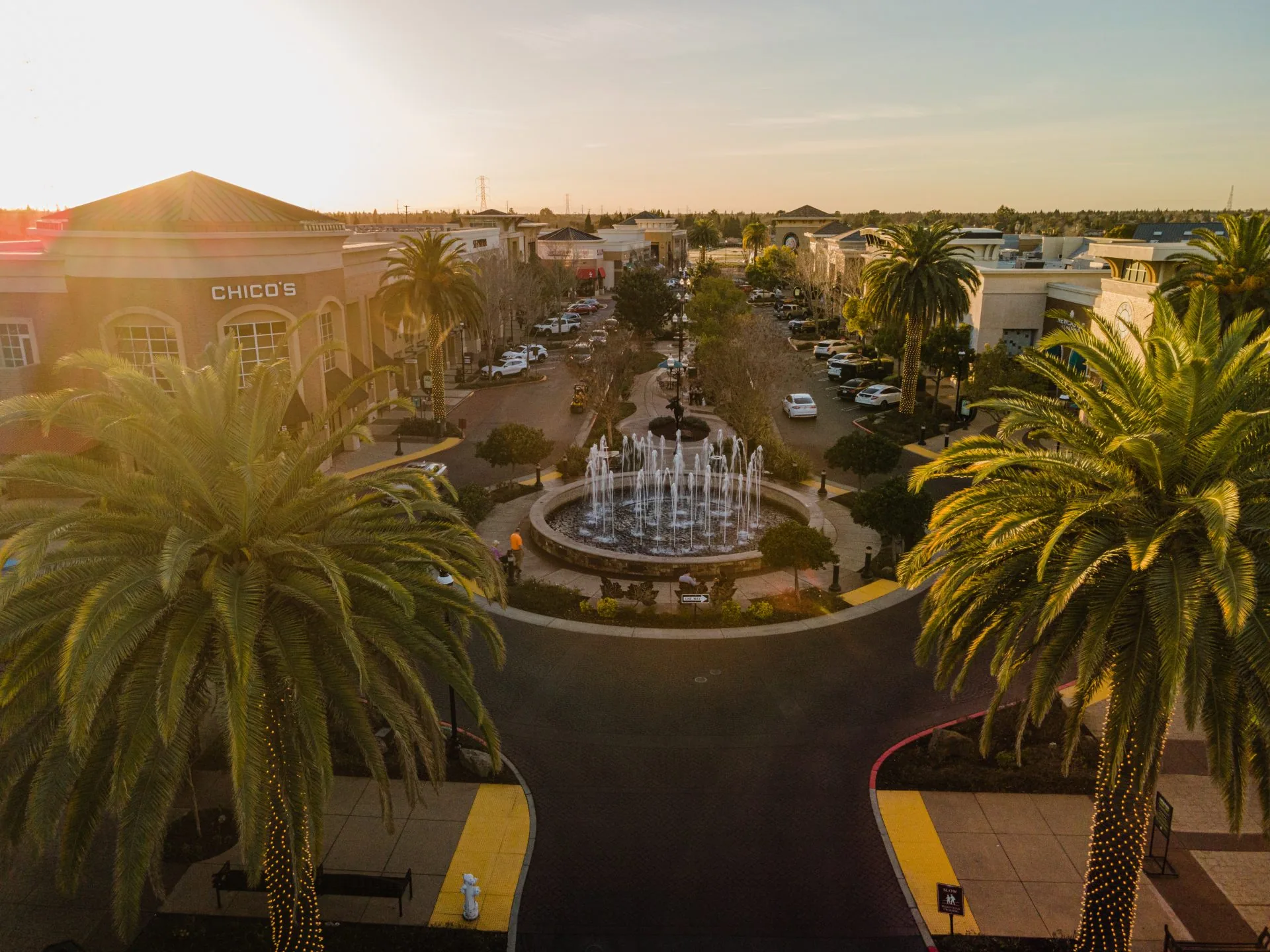
Fair Oaks Boulevard is a major commercial corridor with shops, restaurants, and services. A property manager may be planning a repair, tenant change, or building rehabilitation while those uses continue. We inspect the roof material, seams, edges, drains, penetrations, and past patches, then tie photos to the roof map. A condition report gives the owner a record to compare against later service and capital decisions.
Interior stains do not always sit below the roof opening. Water can travel through insulation or along a deck, so the reported room narrows the starting area without setting the final repair line. We check likely seams, parapets, pipe flashings, and equipment curbs in that zone. If a surface survey suggests concealed moisture, we identify what should be confirmed before affected layers are priced for removal.
Seasonal inspection: prepare for concentrated rain
At Sacramento Executive Airport, normal January precipitation totals 3.66 inches, while July averages none. This regional seasonal pattern makes a late-summer roof walk useful before winter storms return. We check drains, scuppers, overflow paths, and old repairs while the roof can be reached without active rainfall. A small seam opening may not show indoors until water persists around it.
The Sacramento Executive Airport record reaches 100 degrees on about fourteen days in a year. On the roof, we look for loose sealant, brittle patches, membrane shrinkage, and metal movement. A repair must bond to sound material around the defect. If the membrane has separated beyond the visible edge, the proposal should account for that condition.
Drainage review includes the roof plane, strainer, bowl, scupper, and overflow. We note whether water remains after a clear outlet is restored. A low area can need a different correction than a clogged basket or damaged drain detail. The drain and overflow scope should explain what condition is present and how the planned work protects the path to discharge.
Repair choice: limit water without hiding damage
A small opening can take a local repair when the surrounding roof stays dry, attached, and compatible with the patch material. We prepare the membrane, repair the seam or flashing, and photograph the tie-in. A repeated leak at one curb needs a closer look at movement, moisture, and nearby drainage. We mark the repair boundary and identify any condition that requires a separate approval.
A recover may work when the existing layers and deck can support another assembly. New thickness can change the elevation at drains, edge metal, equipment, and thresholds. We check those details and inspect for wet insulation before recommending an overlay. If the concealed layer is not suitable, replacement or selective removal may be the better scope. The recover assessment states which materials remain and where new flashing meets them.
Replacement calls for a complete list: removal, substrate repair, insulation, cover board, membrane, fastening, perimeter metal, drains, and curbs. TPO, PVC, EPDM, and built-up roofs use different seam and flashing details. We match the assembly to design and operation, then show temporary dry-in and work sequencing. A replacement scope should also say how the owner reviews concealed conditions and receives closeout photos.
Live corridor: stage work around entrances
Roof access may cross customer routes, loading areas, or shared service space. We confirm a delivery point, debris route, work hours, and protection below before setting the crew schedule. If a restaurant exhaust fan or other equipment needs service, the trade visit should be coordinated before the final flashing is installed. Each day's plan should leave a secure edge and an accessible route for the next shift.
Fair Oaks and Carmichael are separate Sacramento County communities, each with its own planning area. If an owner manages more than one property, we keep its leak history, roof map, and access notes in separate building records. Orangevale properties may be scheduled in the same service window when access allows, but their assemblies and repair decisions remain property-specific.
Emergency response is available around the clock, including weekends and holidays, when active water needs attention. We first protect the space below and document the temporary measure. A planned reroof has more steps: roof zones, staging, tenant notice, material delivery, inspection timing, and daily dry-in. Setting those details before mobilization reduces changes after the roof is open.
Estimate: price access and the full tie-in
Cost depends on the system, access, removal depth, wet insulation, deck repairs, drain work, curb flashing, and protection for the occupied area. Corridor staging can affect material handling and the crew sequence. We show included quantities and assumptions separately, then identify how hidden damage changes the price. A test opening may be useful when concealed layers determine whether the existing roof can stay.
Timing follows work hours, delivery access, inspection requirements, and trade coordination. We list curb dimensions, shutdown windows, and routes that need to remain clear. For phased work, each section needs a watertight termination until the next visit. Those details help the owner compare repair, recover, and replacement scopes on equal terms.
Roof review: share leak timing and access rules
Tell us which room or business area is affected, when water appears, and what access must remain open. Roof plans, maintenance records, and recent equipment changes help focus the walk. We will inspect the likely entry zone, trace drainage, and photograph seams and flashings that affect the repair boundary. If more testing is needed, the report will identify the question and location.
A scheduled condition assessment can also sort routine maintenance from capital work. We map roof zones, record the visible assembly, check outlets and edges, and note where a later trade could disturb the membrane. The result should tell a facility contact what to repair first, what can be watched, and which unknown needs confirmation before budgeting.
For a property near the Fair Oaks Boulevard commercial corridor, share planned renovation or tenant work before we set dates. We can sequence roof openings and access with the building contact, then leave a condition record for future service. Work at another area such as Citrus Heights can be coordinated by calendar without carrying one property's findings into another.
Commercial Roofing Questions
What should be checked on a roof near Fair Oaks Boulevard?
We inspect the roof plane, seams, flashings, drains, access, and any detail that may affect shops or restaurant operations below. The map ties photos to the specific work area.
Can a blocked drain cause the same problem as failed flashing?
Both can allow water to enter, but they need different corrections. We check the outlet and roof detail separately before setting a repair boundary.
How do you plan work at an active business?
We set material staging, delivery, tenant access, noise periods, and daily closeout before mobilization. The schedule identifies how open roof edges stay protected.
Would a recover add too much height around the drains?
Added layers can change drain, edge, curb, and threshold clearance. We measure those details and check moisture before deciding whether an overlay fits.
What happens if tear-off exposes wet insulation?
We photograph and measure the affected area, then show the owner the added scope for approval. Removal limits and dry-in requirements should be clear before work begins.
Related Roofing Pages
Other pages that cover related roofing work.
Schedule a Fair Oaks commercial roof inspection
Share the leak area, work hours, roof plans, and access limits. We will trace the water route, inspect the assembly, and define the next repair or renewal step. 555-555-5555
Commercial Roofing in Fair Oaks, CA FAQs
Common questions about this topic for Roseville commercial buildings.
What should be checked on a roof near Fair Oaks Boulevard?
We inspect the roof plane, seams, flashings, drains, access, and any detail that may affect shops or restaurant operations below. The map ties photos to the specific work area.
Can a blocked drain cause the same problem as failed flashing?
Both can allow water to enter, but they need different corrections. We check the outlet and roof detail separately before setting a repair boundary.
How do you plan work at an active business?
We set material staging, delivery, tenant access, noise periods, and daily closeout before mobilization. The schedule identifies how open roof edges stay protected.
Would a recover add too much height around the drains?
Added layers can change drain, edge, curb, and threshold clearance. We measure those details and check moisture before deciding whether an overlay fits.
What happens if tear-off exposes wet insulation?
We photograph and measure the affected area, then show the owner the added scope for approval. Removal limits and dry-in requirements should be clear before work begins.